Opening a Second Branch in Pakistan: How to Scale Operations Without Losing Control
Expanding from one retail outlet to two is often the hardest leap in business. Learn how Pakistani retailers can successfully scale operations, track inter-branch stock, delegate staff, and maintain cash control across multiple locations.

In this article
- Opening a Second Branch in Pakistan: Why the First Expansion Is the Hardest
- 1. Build a Centralized Inventory and Catalog Master
- Standardize Barcodes and Stock Keeping Units (SKUs)
- Formalize Inter-Branch Transfers
- 2. Delegate Staff Authority with Role-Based Access
- 3. Protect Billing Continuity Against Infrastructure Hurdles
- 4. Opening a Second Branch in Pakistan: The Checklist
- How CloudPOS Helps You Scale Without Growing Pains
- Turn Expansion into Long-Term Profit
Running a single retail shop in Pakistan relies heavily on owner intuition. When you spend every day standing by the counter—whether your shop is in Karachi's Tariq Road, Lahore's Gulberg, or along a bustling commercial avenue in Rawalpindi—you personally oversee everything. You spot when peanut butter or branded polo shirts run low, you watch staff interact with walk-ins, and you immediately sense when evening cash does not match register takings.
The moment you decide on opening a second branch in Pakistan, that visual control vanishes. You cannot sit behind two cash registers simultaneously. Without the right operational backbone, opening store number two does not double your profit; it doubles your stress, multiplies stock shrinkage, and splits your working capital.
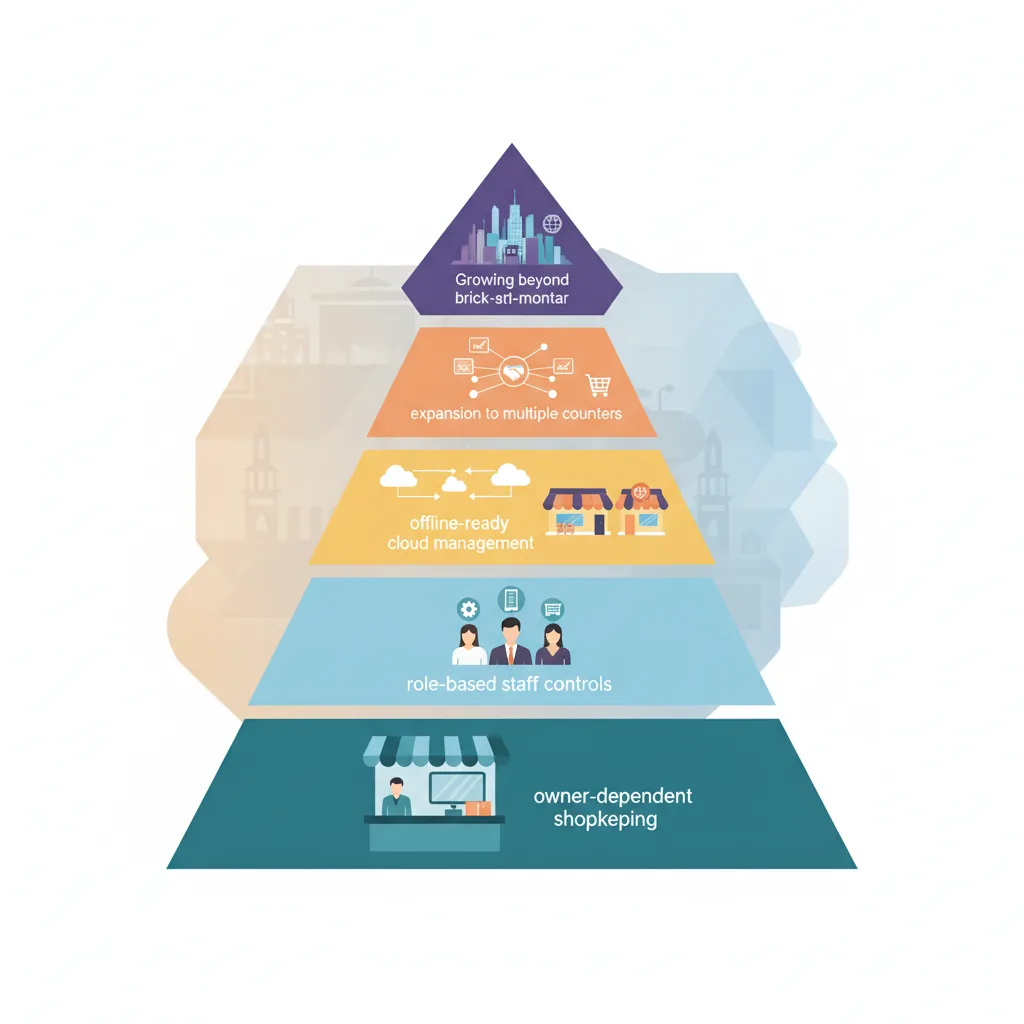
Scaling a retail footprint requires transitioning from physical oversight to structured systems. Here is a practical playbook for establishing operational control, delegating authority, and building a multi-outlet business built to thrive.
Opening a Second Branch in Pakistan: Why the First Expansion Is the Hardest
Most retail founders assume opening branch two will be simpler than launching branch one because brand awareness already exists. In reality, the step from one shop to two is historically the most hazardous inflection point for retail enterprises.
When operating a single shop, informal management works. You can resolve product queries verbally, grant spontaneous discounts to loyal patrons, and adjust purchase orders on scrap paper. Across two stores, these informal habits create blind spots:
- Asymmetrical stockouts: Your flagship outlet sits on unsold excess stock while your new branch turns customers away because high-demand sizes or variants are unavailable.
- Cash reconciliation mismatches: Unmonitored shift handovers, manual register reconciliations, and loose refund policies create unexplained cash leaks at the new branch.
- Diluted customer experience: Regular buyers visiting your new outlet receive inconsistent pricing, zero loyalty recognition, and poor service.
To avoid these pitfalls, your systems must do the heavy lifting that your physical presence used to handle.
1. Build a Centralized Inventory and Catalog Master
Never treat multiple branches as separate commercial islands with disconnected spreadsheets. Before your second store opens its shutters, unify your product catalog across both locations.
Standardize Barcodes and Stock Keeping Units (SKUs)
Every product must share the exact same barcode, title, cost price, and base retail price across your retail network. If an item is labeled under SKU-101 in your primary store, your second branch must not bill it as SKU-101A or an untracked generic item. Standardized SKUs make cross-store stock lookups instant for floor staff.
Formalize Inter-Branch Transfers
Moving inventory between outlets without formal transfer documentation is the number one cause of unexplained stock loss in Pakistani retail. Never let a driver or sales assistant move cartons between branches based on a phone call or WhatsApp voice note.
Establish a strict three-step transfer rule:
- Dispatch creation: The sending store logs an outgoing transfer note detailing exact quantities and batch numbers.
- Transit tracking: Inventory is marked as "in transit" rather than remaining on the issuing branch's active balance.
- Receiving verification: The receiving store manager physically counts and accepts the items on the system, which instantly credits their local stock balance.
2. Delegate Staff Authority with Role-Based Access
Hiring a competent branch manager is vital, but delegation without guardrails invites trouble. You must define clear boundaries within your point-of-sale software and store operating procedures.
Trust your team, but verify through system permissions. Operational freedom works best when software parameters prevent high-risk manual overrides.
Ensure that floor cashiers and new branch supervisors have role-appropriate permissions:
- Discounts and price adjustments: Restrict custom discounts. Configure pre-approved promotional campaigns or cap staff manual discounts to fixed percentages.
- Voided receipts and item cancellations: Require supervisor sign-off to void an ongoing sale or cancel a completed bill to prevent phantom returns.
- Inventory adjustments: Branch staff should record incoming deliveries and run sales, but only business owners or senior inventory controllers should be permitted to adjust ledger balances or write off damaged items.
3. Protect Billing Continuity Against Infrastructure Hurdles
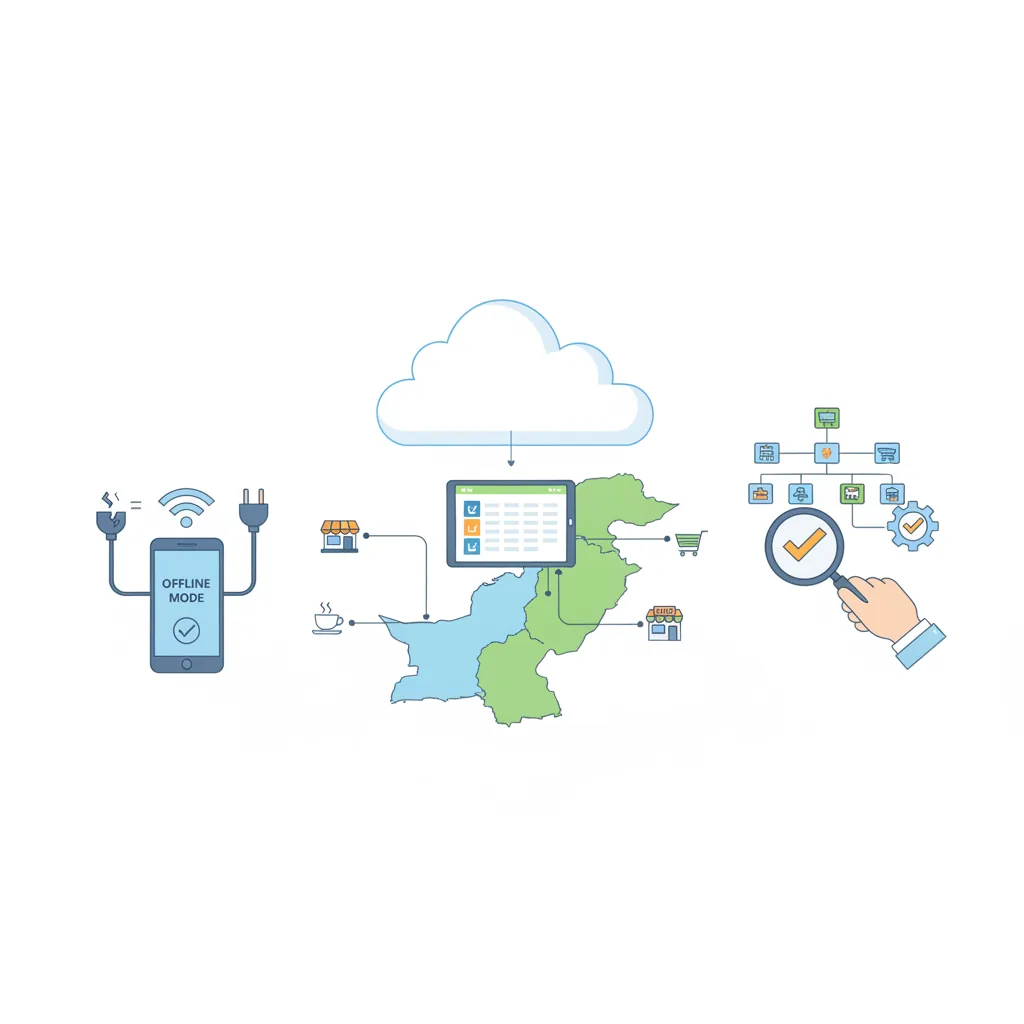
Pakistani retail environments face real-world physical constraints: unpredictable load shedding, fiber cuts, and temporary mobile network disruptions. If your new branch relies on a cloud system that freezes the moment the internet falters, your checkout counter stalls, queues form, and frustrated shoppers walk out.
Choose retail infrastructure that functions with an online-and-offline architecture. Your cashiers must be able to scan barcodes, print customer receipts, and complete card or digital wallet transactions uninterrupted during network outages. The moment connectivity restores, local transactions should automatically synchronize back to the central server without creating duplicate entries or broken sales totals. Before enabling wallets or card payments at the new counter, check the latest digital payment guidance from the State Bank of Pakistan.
4. Opening a Second Branch in Pakistan: The Checklist
Save and review this operational checklist 30 days before opening your second retail location, and confirm the tax registration requirements for the new outlet with the Federal Board of Revenue (FBR):
- [ ] Unified Product Master: All SKUs, variations (size, color, weight), and standard prices are uploaded and tested on both counters.
- [ ] Hardware Redundancy: Backup thermal printers, barcode scanners, and stable UPS or battery backup solutions are installed at the new checkout desk.
- [ ] Role Permissions Configured: Branch staff profiles are created with restricted access (no ability to edit unit costs or delete transaction history).
- [ ] Inter-Store Transfer Protocol: A documented process is in place for requesting, dispatching, and receiving stock between branches.
- [ ] Central Customer Database: The point of sale connects to a shared customer base so shoppers can use store credit, redeem points, or check warranty records at either location.
- [ ] Daily Shift Closing SOP: Strict cash drawer limits and shift-end reconciliation procedures are established to compare expected cash versus actual register counts daily.
How CloudPOS Helps You Scale Without Growing Pains
Transitioning from an independent shop to a multi-branch network requires technology designed for expansion. CloudPOS is an all-in-one cloud POS and AI-powered ERP platform engineered specifically to help Pakistani retailers scale efficiently from a single dashboard.
- Unified Multi-Store Management: Manage pricing, track outlet performance, and balance stock across all branches through one centralized account. Compare sales velocity across locations without downloading fragmented spreadsheets.
- Uninterrupted Online and Offline Billing: Keep lines moving smoothly even when regional internet connections drop. CloudPOS enables offline billing at checkout and automatically syncs data to the cloud the moment connectivity returns.
- Intelligent Stock Alerts and Transfer Tracking: Prevent unexpected stockouts with automated low-stock warnings. Log clean inter-branch stock transfers to eliminate stock leakage between stores.
- Granular Staff Access Controls: Protect your bottom line by setting custom permission tiers for cashiers and branch managers, monitoring individual sales performance, and eliminating unauthorized bill edits.
- Mobile Real-Time Visibility: Dedicated mobile apps let you track daily gross profit, shift closures, and inventory status from anywhere, freeing you from being tied to the counter.
- Built-In E-Commerce & Omnichannel Tools: Connect your in-store inventory directly to your digital storefront or WhatsApp catalog to sell locally and ship nationwide without double-selling stock.
Turn Expansion into Long-Term Profit
Opening a second retail branch is a proud milestone. It marks your transition from a self-employed shop manager to a genuine brand builder. However, long-term retail success does not rely on working twice as many hours—it depends on implementing scalable systems that work consistently whether you are standing on the sales floor or managing from home.
Ready to streamline your multi-outlet expansion and gain complete visibility over every branch? Book a free CloudPOS demo today to discover how our multi-store platform keeps your inventory, staff, and profits firmly under control.
===CONTENT===