Retail Store Operations in Pakistan: The Practical Blueprint for Stock, Staff, and Daily Closing
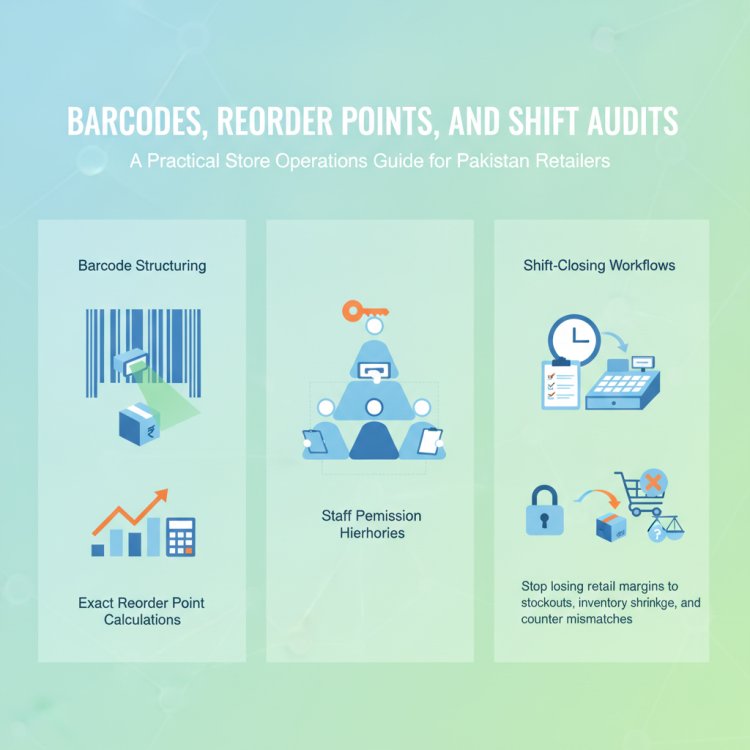
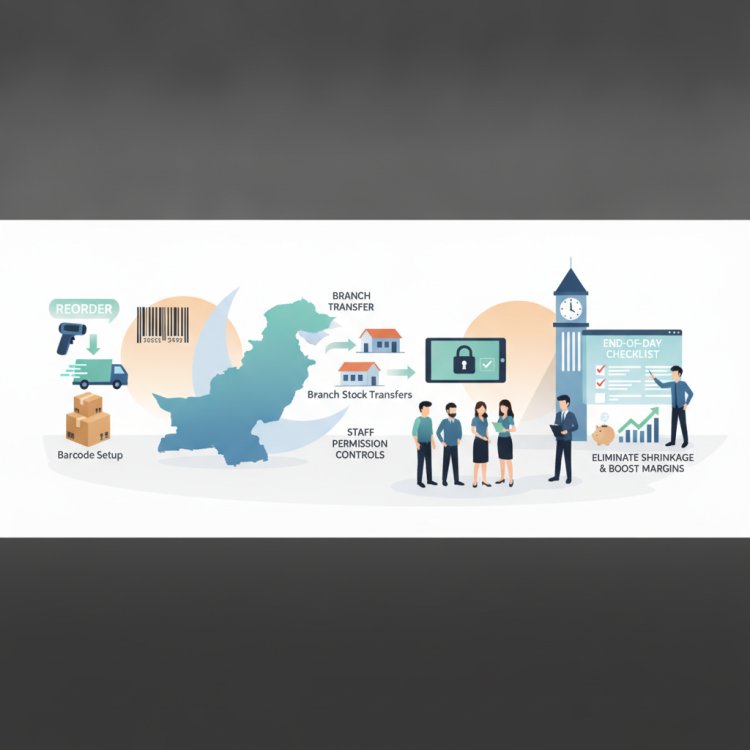
Running a profitable retail store in Pakistan requires airtight daily standard operating procedures. This practical guide covers barcode setup, reorder points, branch stock transfers, staff permission controls, and a complete end-of-day closing checklist to eliminate shrinkage and boost margins.
In this article
- 1. Barcode Setup and SKU Architecture
- 2. Calculating Reliable Reorder Points (ROP)
- 3. Managing Godown and Multi-Branch Stock Transfers
- 4. Role-Based Permissions and Fraud Prevention
- 5. The End-of-Day (EOD) Closing Routine
- The Daily Retail Operations Checklist
- 6. Reading Sales Reports for Operational Insights
- How CloudPOS Helps Streamline Daily Store Operations
- Take Control of Your Store's Daily Execution
If you ask an independent retailer in Karachi, Lahore, or Rawalpindi where their profits leak, they rarely blame weak foot traffic or poor marketing. Instead, the leak happens quietly behind the counter: a cashier approving an unauthorized manual discount, a fast-moving item sitting out of stock because nobody checked the back shelf, or an end-of-day cash drawer that never quite matches the ledger.
When retail operations rely on memory, paper registers, and trust alone, growth becomes a liability. Adding a second counter, opening a warehouse (godown), or launching another branch only multiplies the confusion. To build a resilient retail business in Pakistan, you need systematic Standard Operating Procedures (SOPs). Here is a practical, ground-level blueprint for structuring your store inventory, team workflows, and daily closing routines.
1. Barcode Setup and SKU Architecture
Every operational efficiency starts with how you identify your merchandise. Too many Pakistani shop owners enter generic descriptions like "Lawn Suit" or "Cotton Shirt Blue" without structured stock-keeping units (SKUs) or scannable barcodes. The result? Price confusion at checkout and inaccurate stock balances.
To establish a clean catalog:
- Distinguish manufacturer barcodes from custom labels: Fast-moving consumer goods (FMCG) and branded cosmetics carry standard international UPC or EAN barcodes. Scan these directly into your system. For unbranded apparel, loose items, footwear, or custom tailoring, generate your own internal SKU format.
- Adopt an intuitive SKU taxonomy: A predictable coding system helps your warehouse team sort products rapidly. Use clear category codes such as
CAT-SUB-VAR-ID(for example,M-SHT-BLU-L-001for Men’s Shirt, Blue, Large). - Standardize barcode printing: Invest in a dedicated thermal transfer or direct thermal barcode printer rather than printing sheet labels on office paper. Clear, smudge-proof barcode labels prevent cashier manual entry errors during peak evening rush hours.
2. Calculating Reliable Reorder Points (ROP)
Balancing inventory carrying costs against lost sales is one of the toughest challenges for Pakistani merchants. Holding excess inventory ties up critical working capital in an economy characterized by fluctuating supplier prices. Running out of stock, however, drives loyal customers directly to your competitors.
Avoid relying on visual shelf checks. Instead, establish a calculated Reorder Point (ROP) for your top 20% high-velocity items:
Reorder Point (ROP) = (Average Daily Unit Sales × Supplier Lead Time in Days) + Safety Stock
Consider a pharmacy or grocery store selling an average of 15 packs of a staple item daily. If placing an order with a distributor in Lahore's Shah Alam Market or Karachi's Jodia Bazaar takes 4 business days to arrive, your lead time demand is 60 units. If supplier delays or transport strikes occasionally add 2 days of buffer, your safety stock should be 30 units. Your Reorder Point is:
(15 × 4) + 30 = 90 units.
The moment active floor and backroom stock dips to 90, your procurement process must immediately trigger a replenishment order—preventing stockouts before they happen.
3. Managing Godown and Multi-Branch Stock Transfers
A major vulnerability for expanding retailers is informal stock movement. Moving inventory from a central godown to a front display, or shifting surplus stock between two city branches, often occurs over phone calls or WhatsApp messages. Without documented handoffs, shrinkage is virtually impossible to trace.
Every inventory shift must follow a strict three-step transfer protocol:
- Transfer Request (Dispatch Note): The sending store or godown creates a formal dispatch record specifying exact SKU quantities. At this stage, items are deducted from the originating location's "available" inventory and flagged as "in transit."
- Transit Manifest: The delivery driver or dispatch rider carries a printed or digital delivery note that lists only items and batch quantities—not retail prices.
- Goods Received Confirmation: The receiving branch manager conducts a physical piece-by-piece barcode scan before accepting the transfer. Any discrepancy between dispatched and received units must be flagged and documented immediately, creating clear accountability.
4. Role-Based Permissions and Fraud Prevention
Internal shrinkage and cashier leakage cost retailers thousands of rupees every month. Trusting your team is important, but operational security requires strict separation of duties within your point of sale.
Structure your user permissions into defined operational tiers:
- Cashier / Sales Associate: Can scan products, process tender (cash, cards, digital wallets), and view basic product information. They should not have permission to edit unit prices, apply arbitrary manual discounts, delete line items after receipt generation, or access overall profit margins.
- Shift Supervisor / Duty Manager: Authorized to approve customer returns, issue credit notes, approve discounts above designated limits, and perform mid-day cash-drawer reconciliations.
- Store Owner / Operations Director: Retains exclusive access to supplier cost prices, vendor payment ledgers, staff access management, and historical margin reports.
5. The End-of-Day (EOD) Closing Routine
The end-of-day closing procedure is the ultimate health check of daily operations. When closing is rushed, errors multiply and cash shortages carry over into subsequent shifts. Implementing a standardized checklist ensures consistency across every shift.
The Daily Retail Operations Checklist
- Morning Open:
- Count and verify the opening cash float in the drawer.
- Inspect barcode scanners, receipt printers, and network connections.
- Review low-stock alerts from the previous day's trading.
- Mid-Day Handover:
- Perform a blind cash count if staff change shifts.
- Log any petty cash taken out of the drawer for store expenses (cleaning supplies, tea, utility bills) with matching receipts.
- Evening Close:
- Lock store entrance before beginning cash count to prevent customer distraction.
- Conduct a blind count of physical cash notes and coins before looking at system reports.
- Reconcile card machine settlement slips and QR payment logs against system totals.
- Generate the daily Z-Report to compare theoretical register totals against counted money.
- Document any variance (overage/shortage) with the cashier on duty.
- Secure cash into the safe and ensure offsite cloud data synchronization is complete.
6. Reading Sales Reports for Operational Insights
Many business owners review only one metric at the end of the month: gross turnover. However, top-line sales figures can mask dangerous operational weaknesses. To make informed procurement and staffing decisions, you must track three actionable retail metrics:
- Gross Margin by Category: An item bringing in heavy revenue might yield thin margins after factoring in shelf space and supplier costs. Filter your analytics by category to see which product lines actually pay your overheads.
- Dead Stock & Slow-Moving SKUs: Identify products that have had zero sales over a 60- or 90-day window. Holding unsold stock drains cash flow; bundle slow movers with high-velocity products or liquidate them to free up working capital.
- Sales Velocity by Hour: Review hourly transaction volumes to schedule staff effectively. If data reveals that 65% of your footfall occurs between 5:00 PM and 10:00 PM, adjust shift timings so full floor support is available during peak shopping windows.
How CloudPOS Helps Streamline Daily Store Operations
Standard operating procedures are difficult to sustain when managed on clipboards and isolated spreadsheets. CloudPOS is an all-in-one cloud POS and AI-powered ERP platform engineered specifically to help Pakistani retail, wholesale, and service businesses automate their everyday operational workflows.
Here is how CloudPOS supports your daily operations:
- Resilient Offline Billing: Load shedding and fluctuating internet connections are standard realities in Pakistan. CloudPOS continues processing sales transactions, barcode scans, and printing receipts even when your internet drops. The moment your connection restores, all transaction data syncs seamlessly to the cloud.
- Automated Inventory & Low-Stock Alerts: Eliminate manual shelf inspections. CloudPOS updates your stock in real time with every barcode scan and triggers smart low-stock notifications as soon as items cross your predetermined reorder points.
- Centralized Multi-Store & Godown Management: Manage one store, a central godown, or multiple city branches from a single dashboard. Track internal stock transfers with formal dispatch and receiving records, eliminating unrecorded transit shrinkage.
- Granular Employee Access Controls: Protect your bottom line with role-based permissions. Restrict unauthorized discounts, prevent register tampering, and monitor individual cashier sales performance and attendance directly within the platform.
- Anywhere Analytics & Mobile Monitoring: Store owners do not need to be physically standing behind the till to stay informed. With dedicated mobile apps and real-time cloud reporting, you can track daily sales, review closing summaries, and inspect category margins from anywhere. CloudPOS also provides integrated digital invoicing and local regulatory compliance when your operations expand.
Take Control of Your Store's Daily Execution
Operational discipline is what separates a retail business that constantly struggles with stockouts and unexplained cash shortages from one that runs smoothly and scales predictably. By establishing standardized SKU architecture, tracking automated reorder points, securing staff permissions, and locking down your end-of-day closing routine, you build a store that runs efficiently even when you are not on site.
Ready to automate your store workflows, eliminate inventory blind spots, and run your business with confidence? Contact the CloudPOS team today to book a free CloudPOS demo and discover how our modern cloud platform can transform your retail operations.