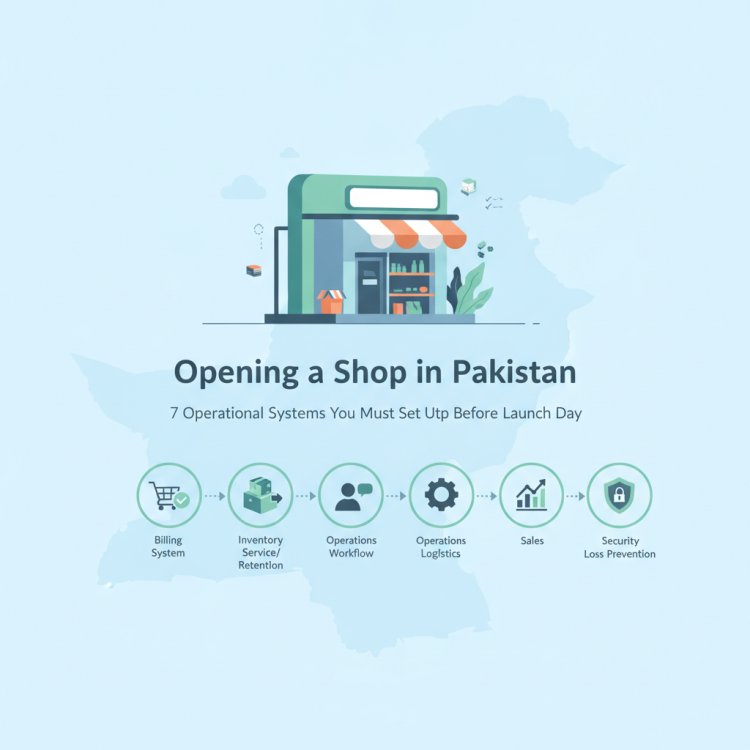
Opening a Shop in Pakistan: 7 Operational Systems You Must Set Up Before Launch Day
Opening a retail store in Pakistan requires far more than aesthetic interiors and opening-day discounts. Explore the 7 core operational systems—from offline-ready billing to customer retention workflows—that prevent stock loss and prepare your business to scale into multiple branches.
In this article
- 1. Standardized Product Cataloging and Barcode Architecture
- 2. Offline-Resilient Billing Infrastructure
- 3. Role-Based Staff Permissions and Cash Float Controls
- 4. First-Party Customer Retention and Loyalty Capture
- 5. Payment Flexibility and Digital Invoicing Readiness
- 6. Automated Low-Stock Triggers and Reordering Cycles
- 7. Multi-Branch and Omnichannel Scalability
- The Pre-Opening Operational Checklist
- How CloudPOS Helps You Launch and Scale Smoothly
- Build for Long-Term Growth from Day One
Every month across commercial hubs like Karachi, Lahore, Rawalpindi, and Faisalabad, ambitious entrepreneurs cut the ribbon on brand-new retail shops. They invest millions of rupees into prime commercial tenancy, custom carpentry, imported lighting fixtures, and glossy launch banners. Yet within the first ninety days, a startling number of these new ventures find themselves overwhelmed—not because shoppers refuse to walk through the door, but because the shop lacks the backend operational infrastructure to handle everyday business.
During the opening week, walk-in traffic is typically strong. Curious passersby, friends, and neighborhood shoppers stream in to explore promotional discounts. However, when the checkout counter relies on disconnected spreadsheets, unbarcoded stock, and hasty manual receipts, cracks form quickly. Cash drawers fail to balance at midnight closing. Fast-selling sizes and variants vanish from the shelves without anyone reordering them. Worst of all, hundreds of first-time shoppers walk out the door without their contact details being captured, turning what should have been loyal repeat customers into one-off transactions.
If you plan to build a business that can eventually grow from a single outlet into a multi-branch brand, you cannot treat operations as an afterthought. Here are the seven essential operational systems every Pakistani retailer must establish before opening the doors on day one.
1. Standardized Product Cataloging and Barcode Architecture
One of the costliest mistakes first-time shop owners make is placing products on shelves without a clean, structured SKU (Stock Keeping Unit) taxonomy. Whether you are launching a garment boutique, a grocery mart, an electronics showroom, or a pharmacy, relying on staff memory for pricing invites cashier errors and stock shrinkage.
Before launch day, your inventory must be cataloged into a single digital ledger with clear categorization:
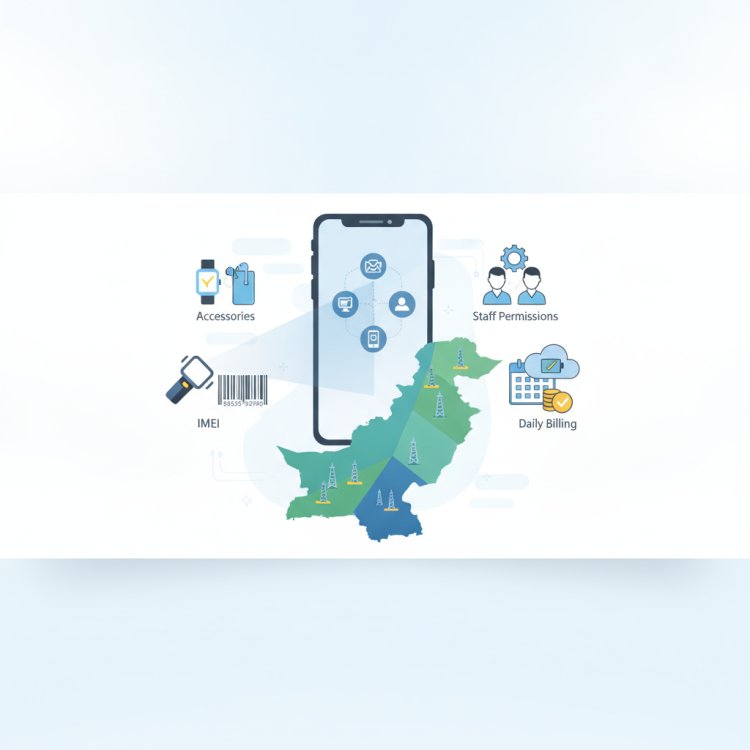
- Item Attributes: Define categories, sub-categories, brands, sizes, colors, and unit measurements. If you sell electronics or mobile devices, ensure your system captures serial and IMEI numbers at the point of receiving.
- Landed Cost Tracking: Record the exact purchase cost from suppliers alongside the retail selling price. Without accurate landed costs, you can never calculate gross profit margins accurately.
- Universal Barcoding: Affix standardized scannable barcode labels to every product that does not already come with manufacturer barcodes. Scanning eliminates checkout guesswork and prevents cashiers from misquoting prices during peak customer rushes.
2. Offline-Resilient Billing Infrastructure
Retail operations in Pakistan face unique infrastructure hurdles. Between load-shedding, power switchovers to UPS or generators, and sudden fiber internet disruptions, your point-of-sale checkout counter cannot rely purely on an uninterrupted web connection. If your billing terminal freezes whenever the broadband signal drops, your checkout lines will stall, customers will abandon their shopping baskets, and your staff will fall back on unrecorded paper chits.
Your billing setup must support seamless offline operations. Cashiers should be able to scan items, apply discounts, issue printed receipts, and pop the cash drawer open even when the internet is entirely down. The system must then automatically synchronize all sales, stock deductions, and ledger balances to the central cloud once connectivity is restored.
3. Role-Based Staff Permissions and Cash Float Controls
Hiring dependable floor staff and cashiers is challenging. In the early weeks of opening, shop owners often make the mistake of sharing a single administrator login across all employees. This lack of access control exposes the store to unrecorded voids, unauthorized manual discounts, and cash mismatches.
To keep operations transparent from day one, establish strict permission tiers:
- Cashier Access: Limited to scanning items, selecting payment methods, and printing receipts. Restrict permissions for line-item deletions, price overrides, and manual refunds unless an authorized manager enters an override code.
- Shift Opening Float: Enforce a strict protocol where cashiers count and verify their opening petty cash float in the drawer before the first sale is rung up.
- End-of-Day Blind Balancing: At shift close, cashiers should enter their physical cash count into the terminal before viewing the system's expected total. This prevents staff from adjusting numbers to mask missing cash.
4. First-Party Customer Retention and Loyalty Capture
Customer acquisition is at its cheapest during your launch campaign because curious shoppers visit naturally. However, customer retention is what determines whether your store survives year one. If you let those first 500 walk-ins leave without capturing their information, you will have to spend marketing budget all over again to bring them back.
Build a simple, low-friction data collection workflow right at the checkout counter:
- Phone Number as Customer ID: Train cashiers to ask for the customer's mobile number politely as part of generating a digital receipt or enrolling them in a launch loyalty program.
- Purchase History Tracking: Linking sales to customer profiles enables you to identify your top 20% most valuable shoppers, track preferred product categories, and send targeted WhatsApp or SMS announcements when fresh stock arrives.
- Tiered Rewards: A simple points-back or discount-tier system incentivizes customers to return to your shop instead of switching to a competitor down the street.
5. Payment Flexibility and Digital Invoicing Readiness
Pakistani consumer payment behavior has transformed significantly. According to quarterly transaction data from the State Bank of Pakistan, digital payment channels and mobile wallet adoptions continue to set historic volumes across the country. Modern consumers increasingly expect to pay through debit cards, Raast QR codes, JazzCash, or EasyPaisa alongside traditional physical cash.
Your point-of-sale counter should accommodate split tenders, allowing a customer to pay part of their bill in cash and the remainder via a digital wallet or card. Furthermore, ensure your billing software supports local tax rules, digital invoicing requirements, and sales tax compliance without requiring manual calculations during a busy Saturday evening rush.
6. Automated Low-Stock Triggers and Reordering Cycles
Running out of high-demand merchandise damages your reputation with new shoppers, while overstocking slow-moving products traps critical working capital. Many new store owners attempt to manage restocking by walking the aisles with a clipboard at the end of the week, which inevitably leads to stockouts of top-selling items.
Before launching, establish minimum and maximum par levels for every item in your system. Whenever inventory dips below the minimum threshold, your system should trigger an immediate low-stock alert. This allows you to generate purchase orders for distributors well before shelves sit empty, maintaining strong supply-chain discipline from week one.
7. Multi-Branch and Omnichannel Scalability
Even if you are opening just one physical shop today, setting up your business architecture as though you already operate multiple branches saves immense frustration later. If you use standalone desktop software that traps your database on a single computer hard drive, opening a second branch in another commercial market will force you to manage fragmented inventories and reconcile disparate ledgers manually.
A scalable cloud architecture gives you unified visibility over your business. It allows you to monitor sales, gross margins, and staff performance in real time from a mobile phone, transfer stock smoothly between locations as you grow, and connect your physical catalog to an eCommerce website or social media sales channels without double-handling data.
The Pre-Opening Operational Checklist
Keep your team organized during the chaotic two weeks leading up to launch by reviewing this operational checklist:
- T-Minus 14 Days (Stock & Suppliers):
- Import and verify all vendor details, payment terms, and contact numbers.
- Complete SKU and barcode uploads with accurate cost and retail prices.
- Set automated minimum reorder thresholds for fast-moving items.
- T-Minus 7 Days (Hardware & Infrastructure):
- Test thermal receipt printers, cash drawers, and barcode scanners on all terminals.
- Verify UPS backup power continuity for the checkout counter.
- Perform an offline billing test by disconnecting internet cables to verify local transaction caching.
- T-Minus 3 Days (Staff & Financials):
- Create separate employee logins with specific access permissions.
- Train cashiers on refund procedures, partial payments, and customer mobile number collection.
- Prepare opening cash drawer floats with adequate denominations for change.
- Launch Morning (Final Sign-Off):
- Verify the opening cash float in the system.
- Conduct a mock end-to-end transaction, receipt print, and return on the terminal.
- Confirm sales reporting sync is active on your remote mobile dashboard.
How CloudPOS Helps You Launch and Scale Smoothly
Building disciplined retail operations is straightforward when your technology works with local business realities rather than against them. CloudPOS is an all-in-one cloud point-of-sale and AI-powered ERP platform engineered specifically for retail, wholesale, and service businesses across Pakistan.
Here is how CloudPOS supports your business from launch day to multi-branch expansion:
- Continuous Online and Offline Billing: Keep processing sales, scanning barcodes, and printing receipts even when your store experiences internet outages or load-shedding switchovers. The platform caches transactions locally and syncs back to the cloud automatically once your connection returns.
- Real-Time Stock Control: Track every item down to size, color, or IMEI number, with smart low-stock notifications that alert you before critical products sell out.
- Staff Accountability: Safeguard your profits using custom employee access controls, staff attendance tracking, and individual sales performance metrics.
- Customer Retention & CRM: Capture shopper profiles, review detailed purchase histories, and reward repeat buyers to build lasting loyalty from your very first customer.
- Effortless Multi-Store Management: Manage one outlet or dozens of branches across multiple cities from a single account. Easily coordinate stock transfers, centralize supplier procurement, and monitor consolidated revenue.
- Remote Mobile Intelligence: Dedicated mobile apps allow business owners to monitor real-time sales, inventory balances, and closing reports from anywhere in the world.
- Enterprise-Grade Cloud Security: Backed by a high-availability infrastructure featuring live and replica servers, automated offsite backups, two-factor authentication, and end-to-end data encryption.
Build for Long-Term Growth from Day One
A beautiful retail shop front may draw customers in on opening weekend, but dependable systems are what ensure your business thrives twelve months later. By establishing clear product taxonomies, offline-ready checkouts, staff controls, customer retention tools, and real-time inventory management before you open your doors, you protect your margins and create an operational blueprint built to scale.
Are you opening a new store or preparing your current outlet for multi-branch expansion? Speak with our team in Gujrat at +92 309 308 9999 or book a free CloudPOS demo today to see how our cloud platform can power your growth.