Quick Commerce in Pakistan: How Independent Retailers Can Win Against 30-Minute Delivery
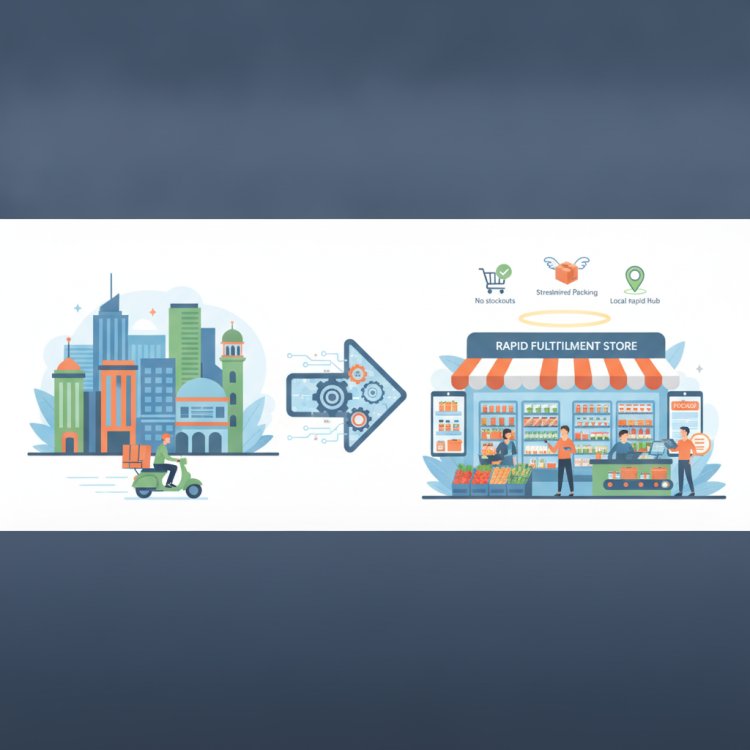
Quick commerce and instant delivery are reshaping urban retail across Pakistan. Learn how independent grocers, pharmacies, and specialty retailers can eliminate stockouts, streamline packing, and turn their local stores into rapid fulfillment hubs.
In this article
- Understanding the Quick Commerce Surge in Urban Pakistan
- The Hidden Advantages of the Neighborhood Store
- 1. Proximity and Zero Extra Rent
- 2. Decades of Customer Goodwill
- 3. Real Walk-In Margins Fund Your Operations
- The 4 Operational Bottlenecks Holding Local Retailers Back
- Practical Checklist: Preparing Your Store for Hyperlocal Delivery
- How CloudPOS Helps Pakistani Retailers Meet Digital Speed
- The Road Ahead: Building a Resilient Neighborhood Brand
If you run a retail shop in Karachi, Lahore, Rawalpindi, or Faisalabad, you have likely noticed a subtle change in how your regular customers buy. A few years ago, neighborhood households made a weekly trip to the local market with a handwritten paper list. Today, that same customer reaches for their phone when they run out of milk, cooking oil, or emergency headache medicine, expecting a delivery rider at their gate within 20 to 30 minutes.
This shift is not just a passing habit—it represents the rapid rise of quick commerce (Q-commerce) across urban Pakistan. As reported by The Express Tribune on Pakistan's quick-commerce expansion, digital payments and convenience-driven Gen Z shoppers are pushing instant delivery into hyper-growth, with online ordering volumes climbing month after month. For years, traditional shopkeepers assumed e-commerce was only for clothes, smartphones, or electronics shipped via courier over three to five business days. Quick commerce has changed the rules by targeting the heartbeat of everyday commerce: groceries, personal care, bakeries, OTC pharmacy products, and household essentials.
For independent retailers, this presents an urgent question: how can a single-store or small multi-branch business compete when venture-backed apps and dedicated "dark stores" promise sub-30-minute delivery? The answer is surprising: neighborhood retailers actually hold powerful competitive advantages—provided their counter operations and inventory systems are built for digital speed.
Understanding the Quick Commerce Surge in Urban Pakistan
To navigate this retail transformation, it helps to understand why instant fulfillment is gaining traction so quickly across Pakistani cities:
- The Urban Time Crunch: High fuel prices, worsening city traffic, and demanding work schedules make short trips to crowded markets inconvenient for dual-income households and young professionals.
- Smartphone Ubiquity and Digital Wallets: With mobile broadband penetration expanding nationwide, placing an app or chat order and settling it via mobile wallets, instant bank transfers, or QR payments has become second nature for millions of consumers.
- The End of the "Batch" Grocery Run: Urban consumers increasingly prefer buying in smaller, frequent baskets based on immediate need rather than locking up monthly household cash flow in large supermarket runs.
When dark stores first launched in Pakistan, some analysts predicted they would render local stores obsolete. Yet running centralized dark stores carries massive overhead: high real-estate leases, dedicated picking labor, expensive app marketing, and fragile unit economics. Independent retailers, by contrast, already have storefronts in the exact residential pockets where customers live. The challenge is not your location—it is whether your back-of-house operations can process orders with modern efficiency.
The Hidden Advantages of the Neighborhood Store
Before assuming that instant delivery belongs only to massive tech companies, consider the strategic strengths already sitting behind your counter:
1. Proximity and Zero Extra Rent
Dedicated fulfillment hubs must lease expensive warehouse or commercial space in prime residential sectors like DHA, Gulberg, Bahria Town, or Clifton. As an established brick-and-mortar retailer, your shop is already embedded directly in the community. Your fulfillment center is simply your existing sales floor.
2. Decades of Customer Goodwill
Trust is an enormous asset in Pakistani retail. When a customer buys prescription medication from their trusted local pharmacy, or buys loose spices and brand-name ghee from a grocer they have known for ten years, they do not worry about counterfeit products or expired stock. App-based services spend vast marketing budgets trying to engineer the trust you already have.
3. Real Walk-In Margins Fund Your Operations
Unlike pure-play delivery apps that bleed cash whenever customer acquisition costs spike, your business is anchored by foot traffic. In-store walk-in sales provide consistent daily cash flow, meaning your delivery or phone-order orders can function as high-margin incremental revenue rather than an expensive gamble.
The 4 Operational Bottlenecks Holding Local Retailers Back
If neighborhood stores have proximity and trust, why do so many struggle when trying to offer fast local delivery or phone orders? In practice, the breakdown almost always happens at the operational level:
- The "Ghost Stock" Trap: A customer orders three items over the phone or WhatsApp. Your staff confirms the order, only to discover twenty minutes later that the specific SKU is out of stock on the shelf. The customer cancels, and trust is broken.
- Slow, Manual Checkout and Packing: If your cash register depends on manual price entry or pen-and-paper slips, a staff member spending five minutes hunting for prices slows down both in-store walk-ins and outbound deliveries.
- Disconnected Sales Channels: Selling to walk-ins at the register while taking phone orders in a spiral notebook leads to double-selling. If two units are left and a walk-in buys them, your remote customer receives the wrong goods.
- No Customer Purchase Memory: When a loyal customer calls, staff who have to ask for their delivery address, phone number, and preferred brand variant every single time create friction that drives shoppers back to one-click mobile apps.
Practical Checklist: Preparing Your Store for Hyperlocal Delivery
Competing in this era does not require you to build a multi-million-rupee smartphone app. It requires turning your counter into a disciplined, connected fulfillment station. Use this operational checklist to prepare your store:
- Barcoding Every SKU: Replace manual mental pricing with standardized barcode scanning. Accurate barcodes eliminate cashier guesswork, prevent price disputes, and allow packing staff to scan and bag an outbound order in under ninety seconds.
- Live Inventory Tracking: Stop relying on end-of-month manual stock-taking to know what you own. Your system must decrement inventory the second an item is scanned at the counter or marked for delivery.
- Setting Automated Reorder Triggers: Identify your top 20% high-velocity household items—such as dairy, tea, cooking oil, panadol, or baby wipes. Configure low-stock alerts so you receive vendor replenishment alerts before the shelf is empty.
- Building Digital Customer Profiles: Record customer phone numbers, delivery addresses, and purchasing patterns at checkout. When a regular calls or messages, your team can pull up their history instantly, suggest their usual items, and confirm delivery in seconds.
- Standardizing Rider Hand-Offs: Whether you employ your own neighborhood delivery boy on a motorbike or partner with third-party urban dispatch couriers, ensure every outbound order has a printed receipt showing clear itemized pricing, discounts, and payment status (Cash on Delivery or prepaid).
How CloudPOS Helps Pakistani Retailers Meet Digital Speed
Modernizing your shop to handle both crowded walk-in queues and rapid remote orders requires software designed for the real-world conditions of Pakistani commerce. CloudPOS provides an all-in-one cloud POS and AI-powered ERP platform engineered specifically to help local retailers operate with digital efficiency.
- Real-Time Inventory Management with Smart Low-Stock Alerts: CloudPOS updates your stock levels across every SKU instantaneously. Automated low-stock alerts notify your purchasing team before essential items run out, protecting you from embarrassing out-of-stock cancellations.
- Lightning-Fast Barcode Billing: The CloudPOS Point of Sale module supports instant barcode scanning, flexible item discounts, and quick returns, keeping checkout lines moving smoothly while staff rapidly assemble phone or online orders.
- Reliable Online and Offline Operation: Internet disruptions and load shedding are everyday realities for retailers across Pakistan. CloudPOS keeps your billing counter fully operational even when your internet connection drops. All offline sales and stock movements automatically sync to secure cloud servers the moment connectivity is restored.
- Built-In Customer Management: Capture customer contact details, delivery addresses, and detailed purchase histories directly within your POS. Your counter staff can instantly check what a customer ordered last week and personalize every interaction.
- eCommerce and Courier Integrations: Connect your in-store catalog directly to online sales platforms and courier services. CloudPOS allows you to manage online orders, counter sales, and delivery dispatch from one unified account without maintaining separate ledgers.
- Dedicated Mobile Apps for Store Owners: Track real-time branch sales, gross margins, and staff performance from your smartphone no matter where you are. Whether you manage a single pharmacy or supervise three grocery branches, you maintain full operational control.
- Multi-Store Control and Scalability: If you expand from one shop to multiple neighborhood outlets, CloudPOS lets you monitor stock across branches, initiate inter-store transfers, and control employee permissions and cash registers from a central dashboard. Local compliance, tax rates, and digital invoicing are seamlessly integrated into everyday billing as standard practice.
The Road Ahead: Building a Resilient Neighborhood Brand
The rise of quick commerce is not a death sentence for independent retailers in Pakistan; it is a clear signal that customer expectations have evolved. Pakistani consumers still value face-to-face service, fresh goods, and the relationships they share with their neighborhood shopkeepers. But they will no longer tolerate stockouts, slow counters, or chaotic manual ordering.
By digitizing your inventory, adopting rapid barcode checkout, and treating every remote order with the speed of an instant-delivery dark store, your business can protect its core customer base and unlock profitable new revenue channels.
Ready to upgrade your store operations, eliminate stockouts, and serve both in-store and delivery customers at digital speed? Visit our team or book a free CloudPOS demo today to see how modern cloud POS and AI-powered ERP software can transform your retail business.