Building Customer Loyalty in Pakistan: A Practical Retention Playbook for Retailers
Discover actionable customer retention strategies tailored for Pakistani retailers. Learn how to capture customer profiles at checkout, create high-converting loyalty rewards without destroying margins, and use purchase history to drive repeat footfall.
In this article
- The True Economics of Retention in Pakistan's Retail Landscape
- Five Retention Mistakes That Cost Pakistani Retailers Millions
- 1. Distributing Physical Plastic Loyalty Cards
- 2. Relying on Blanket Site-Wide Discounts
- 3. Asking for Too Much Information at the Cash Counter
- 4. Treating All Shoppers Identically
- 5. Running Disconnected Systems Between Branches
- The 4-Step Retail Retention Playbook
- Step 1: Simplify Checkout Capture with Mobile Numbers
- Step 2: Build a Points-Based, Transparent Reward Mechanism
- Step 3: Leverage Purchase History for Smart Re-Engagement
- Step 4: Connect the In-Store and Online Experience
- Checklist: Setting Up Your Retail Retention Engine
- How CloudPOS Helps Retailers Build Lasting Customer Retention
- Turn One-Time Walk-Ins into Long-Term Growth
Walk through any bustling commercial hub in Pakistan—whether it is Tariq Road in Karachi, MM Alam Road in Lahore, or Saddar in Rawalpindi—and you will see retail owners spending heavily to get people through their doors. They pay premium rents for high footfall, invest hundreds of thousands of rupees into shop fittings, and burn monthly ad budgets on social media campaigns.
Yet, observe the billing counter at 8:30 PM on a busy Saturday. A customer picks three items, hands over cash or scans a card, receives a printed receipt, and walks out the door. The cashier registers the sale, but records nothing about the buyer. No name, no phone number, and no record of what they like to buy. In less than two minutes, a hard-won customer vanishes back into the crowd, leaving the store to pay all over again to attract someone new tomorrow.
For independent retailers, pharmacy owners, boutique managers, and restaurant operators looking to scale, this customer acquisition treadmill is unsustainable. High operational costs and persistent inflation make chasing new footfall the most expensive way to grow. Real, lasting profitability in retail is built on turning first-time walk-ins into repeat regular buyers.
The True Economics of Retention in Pakistan's Retail Landscape
Retail research consistently shows that acquiring a new customer costs up to five to seven times more than retaining an existing one. In a price-conscious market like Pakistan, repeat customers offer three distinct commercial advantages:
- Higher Average Order Value (AOV): Repeat customers already trust your quality and sizing. They spend less time hesitating at the counter and are significantly more receptive to upselling and cross-selling.
- Zero Re-Acquisition Cost: When a customer returns because of a previous positive experience or an earned reward, you pay zero marketing money on that transaction. That margin goes straight to your bottom line.
- High Organic Word-of-Mouth: In Pakistan, consumer trust is heavily communal. Recommendations among family, colleagues, and WhatsApp groups drive more qualified walk-ins than standard promotional flyers ever will.
Despite these clear benefits, many independent retail owners treat customer retention as an afterthought or assume it requires complicated, enterprise-level marketing software. In reality, effective loyalty programs rely on simple, consistent operational habits backed by the right checkout systems.
Five Retention Mistakes That Cost Pakistani Retailers Millions
Before launching a customer loyalty initiative, it helps to understand why traditional attempts often fail in the local retail market:
1. Distributing Physical Plastic Loyalty Cards
Plastic cards were popular a decade ago, but today they represent friction and waste. Shoppers do not want to carry a bulky wallet filled with plastic membership cards. When your cashier asks for the card at billing, nine out of ten customers will say they left it at home. If points cannot be verified instantly, the incentive disappears.
2. Relying on Blanket Site-Wide Discounts
Slashing prices by 20% or 30% across your entire store to stimulate footfall trains shoppers to wait for sales. It damages your brand perception and compresses gross margins. Real customer loyalty is built on recognition, personalized perks, and earned rewards—not chronic margin erosion.
3. Asking for Too Much Information at the Cash Counter
When there is a queue of four impatient shoppers at the counter, your cashier cannot hand out paper registration forms asking for email addresses, home addresses, and wedding anniversaries. Friction at checkout irritates customers and slows down transaction speed. Information capture must take five seconds or less.
4. Treating All Shoppers Identically
A shopper who visits your apparel boutique twice a month and spends PKR 50,000 receives the exact same standard treatment as a passerby who bought a clearance item for PKR 1,500. When your highest-value customers feel anonymous, they have no reason to stay loyal when a competing store opens nearby.
5. Running Disconnected Systems Between Branches
If you have grown from one outlet to two or three, your customer should feel recognized whether they step into your Gulberg branch or your DHA outlet. If their points and purchase history are trapped on a standalone hard drive at the original store, your brand experience feels disjointed and amateur.
The 4-Step Retail Retention Playbook
To turn walk-ins into reliable recurring revenue, you need an operational system that runs quietly in the background of your daily sales. Here is a practical, tested framework for independent Pakistani stores:
Step 1: Simplify Checkout Capture with Mobile Numbers
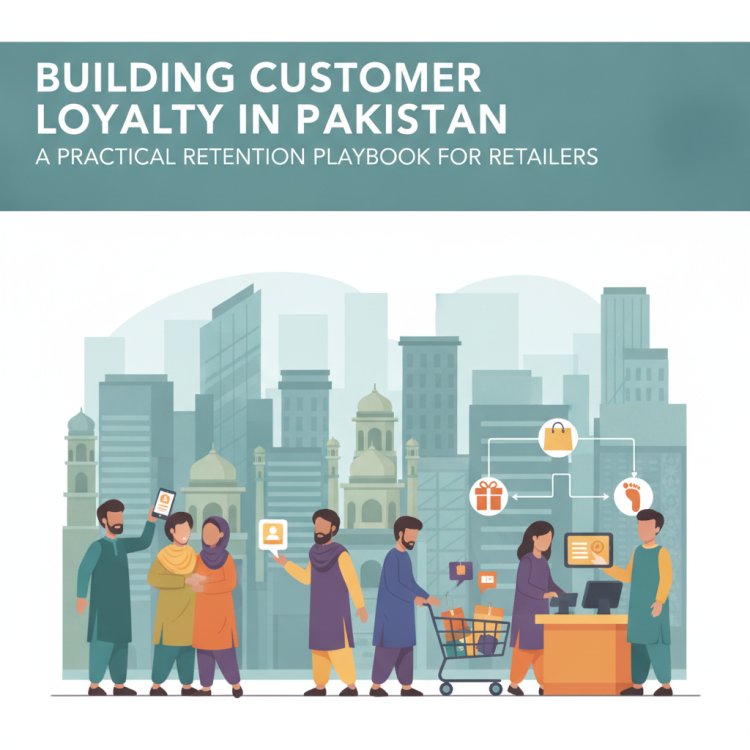
In Pakistan, the mobile phone number is the primary digital identifier. When ringing up a sale, train your cashier with a simple script: "Sir/Ma'am, may I have your mobile number so we can credit loyalty points to your account?"
This framing shifts the interaction from an intrusive data collection exercise into an immediate customer benefit. Within three seconds, the phone number is entered into the POS screen, linking that basket's items directly to the customer's permanent profile.
Step 2: Build a Points-Based, Transparent Reward Mechanism
A simple points formula works best: Spend PKR 100, Earn 1 Point; 1 Point = PKR 1 on Future Purchases (effectively a 1% to 2% reward). Keep the mechanics straightforward so your staff can explain it instantly. Avoid complicated expiry rules or conversion tiers that confuse customers.
Step 3: Leverage Purchase History for Smart Re-Engagement
Collecting customer profiles is useless if you never look at the data. An organized customer database reveals critical buying habits:
- Replenishment Cycles: In pharmacies, groceries, and baby care stores, certain products (diapers, infant formula, monthly maintenance medications) are purchased every 25 to 30 days. Reaching out with a polite restock reminder captures that repeat order before they buy elsewhere.
- Size and Category Preferences: In garment and footwear stores, knowing who bought unstitched festive lawn versus pret wear allows you to send targeted announcements for new arrivals rather than spamming your entire list with irrelevant stock.
- Lapsed Shopper Recovery: Run a quick monthly report for customers who haven't visited in 60 days. A modest check-in message with a small welcome-back reward often recovers 10% to 15% of drifting accounts.
Step 4: Connect the In-Store and Online Experience
Modern consumers browse on social media, buy in physical stores, or order online for home delivery. If you operate both a brick-and-mortar outlet and an eCommerce website, your customer database and inventory should ideally speak the same language. A customer who shops in your store should have their loyalty recognized when ordering online, creating a frictionless multi-channel experience.
Checklist: Setting Up Your Retail Retention Engine
Save this checklist to audit your store's customer retention readiness:
- [ ] Cashier Onboarding: Staff are trained to ask for a phone number pleasantly on every bill without slowing down transaction speed.
- [ ] Zero-Hardware Identifier: Customers are identified via their mobile number instead of physical plastic loyalty cards.
- [ ] Central Customer Database: Purchase records, return history, and spent balances are automatically linked to a single profile.
- [ ] Multi-Store Synchronization: If you run multiple branches, customer data and reward balances sync across all locations.
- [ ] Segmentation Protocol: You have a simple way to identify your top 20% spending customers and inactive shoppers.
- [ ] Offline Safeguards: Checkout counters can access customer profiles and register sales even during internet outages.
How CloudPOS Helps Retailers Build Lasting Customer Retention
Scaling a retail business across Pakistan requires technology built specifically for local operational realities. CloudPOS provides a unified cloud POS and AI-powered ERP platform that simplifies customer retention and retail management from a single dashboard:
- Integrated Customer Management: Capture customer names and mobile numbers at checkout in seconds. CloudPOS tracks complete purchase histories, item preferences, and lifetime spend per customer, turning random walk-ins into rich customer profiles.
- Multi-Store Synchronization: Managing branches across different cities or neighborhoods? CloudPOS allows you to run multiple outlets from one central account. A regular customer can shop at your primary store or a new branch, with their profile and buying history accessible to your counter staff anywhere.
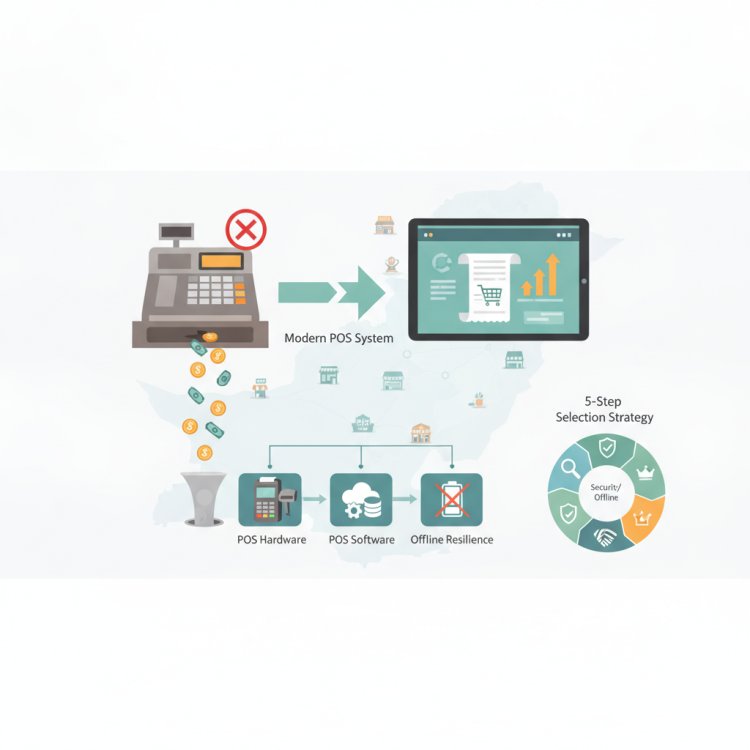
- Offline Billing Resilience: Unstable internet connections shouldn't stall your customer loyalty efforts. CloudPOS works both online and offline. Your cashiers can continue barcode scanning, processing discounts, and completing bills without an internet connection; all transactions and customer data sync automatically to the cloud as soon as the connection returns.
- Sales Reports & Analytics: Make data-driven decisions using built-in reporting. Identify your most profitable items, track staff sales performance, and pinpoint customer buying patterns without spending hours compiling manual spreadsheets.
- Smart Inventory Control: Retaining customers requires always having their favorite items in stock. CloudPOS features real-time inventory management with smart low-stock alerts, ensuring you reorder high-demand products before shelves run empty.
- eCommerce Integration: CloudPOS bridges physical retail with digital commerce, helping you align inventory and customer sales across walk-in counters and online storefronts.
- Anywhere Management via Mobile Apps: Dedicated mobile apps and tablet support give business owners the freedom to check daily customer counts, branch revenue, and inventory levels in real time from anywhere.
Turn One-Time Walk-Ins into Long-Term Growth
Every customer who steps into your store represents money, effort, and opportunity. If you let them leave without recording who they are or giving them a structured reason to return, your business will constantly operate at the mercy of unpredictable footfall and rising advertising expenses.
By shifting your focus from pure acquisition to systematic customer retention, you create a stable, predictable foundation for growth. When your billing systems, inventory control, and customer profiles work seamlessly together, scaling from your first shop to multiple successful outlets becomes a manageable, profitable reality.
Ready to upgrade your counter operations, protect your profit margins, and build a base of loyal repeat shoppers? Book a free CloudPOS demo today and see how easy it is to manage your store, inventory, and customer relationships from one intuitive platform.