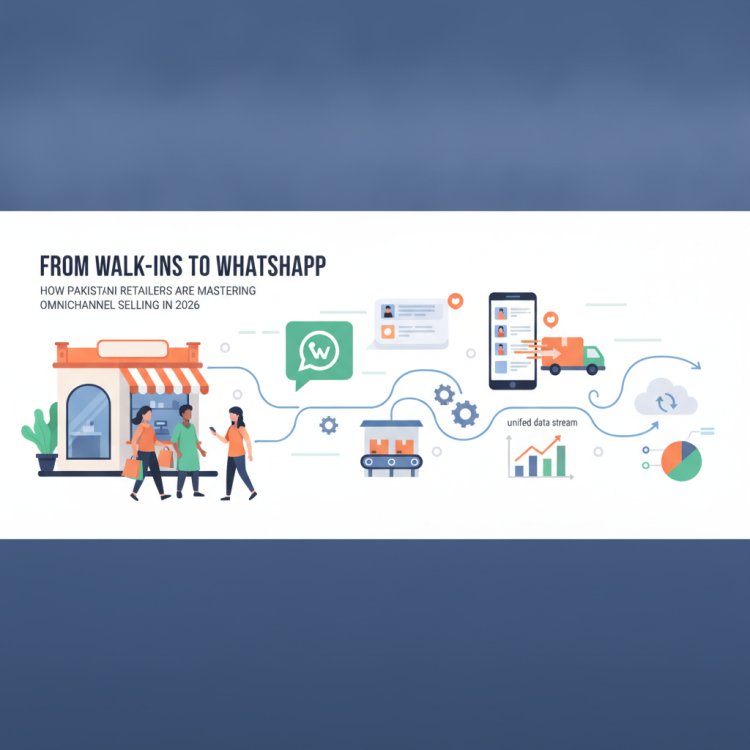
From Walk-Ins to WhatsApp: How Pakistani Retailers Are Mastering Omnichannel Selling in 2026
Pakistani retail is shifting rapidly as local shops balance physical counter sales with WhatsApp inquiries, social commerce, and courier deliveries. Learn how to eliminate stock mismatches, streamline digital orders, and build a unified shopping experience.
In this article
- The Numbers Behind Pakistan’s Social and Digital Commerce Boom
- The Hidden Friction of "Manual" Omnichannel Selling
- A Practical Checklist for Modernizing Your In-Store and Digital Operations
- How CloudPOS Helps Pakistani Retailers Scale Omnichannel Operations
- Preparing Your Retail Business for the Road Ahead
Walk into a clothing boutique, electronics shop, or specialty store in Lahore, Karachi, or Gujrat today, and you will notice something very different behind the cash counter. While one salesperson rings up a customer standing right in front of them, another is responding to rapid-fire WhatsApp voice notes from a buyer in Faisalabad, checking stock on a top shelf, and packaging a box for an afternoon courier pickup. The traditional Pakistani retail shop has quietly transformed into a mini-fulfillment hub.
For decades, retail in Pakistan was strictly divided into two camps: conventional brick-and-mortar bazaar shops that relied entirely on physical foot traffic, and digital-first businesses operating out of warehouses. That boundary has collapsed. Driven by widespread smartphone adoption, affordable 4G and 5G connectivity, and shifting consumer expectations, Pakistani consumers now browse on social media, confirm pricing on messaging apps, and demand the flexibility to buy in-store or receive deliveries right to their doorstep.
This hybrid model—known as omnichannel retail—represents one of the most profitable opportunities for local businesses today, but it also introduces operational friction that can easily overwhelm an unprepared shop owner. Here is a look at what is driving this trend across Pakistan and how forward-thinking retailers are adapting their day-to-day operations.
The Numbers Behind Pakistan’s Social and Digital Commerce Boom
The pace of digital commerce adoption across Pakistan has accelerated substantially over the past few years. According to industry analyses tracking SME digital adoption, local entrepreneurs are increasingly converting social media channels into primary sales storefronts. With well over 70 million active social and messaging app users in the country, platforms like WhatsApp, Instagram, and TikTok have evolved from simple marketing channels into real-time transactional counters.
At the same time, national parcel delivery networks and third-party logistics firms have rapidly expanded their footprint into secondary and tertiary cities, making next-day or two-day delivery standard even outside major metropolitan centers. Pakistani shoppers no longer feel confined to buying only from neighborhood shops; conversely, a single-outlet retailer in Sialkot or Rawalpindi can now comfortably serve buyers nationwide.
However, running physical counters alongside remote digital orders introduces unique operational hurdles that standard pen-and-paper ledgers or basic offline billing terminals simply cannot solve.
The Hidden Friction of "Manual" Omnichannel Selling
When shopkeepers attempt to manage both walk-ins and digital sales channels manually, operational cracks quickly appear. The most common bottlenecks include:
- The Double-Selling Dilemma: A customer on WhatsApp agrees to buy the last pair of shoes in size 42. While the staff member is replying to the chat, a walk-in customer picks up the same box and pays at the counter. When the shipping team goes to pack the parcel an hour later, the item is gone, leading to an embarrassing customer cancellation.
- Disjointed Cash and Courier Tracking: Counter sales bring immediate cash, card, or QR payments, while remote shipments rely heavily on Cash on Delivery (COD) handled by courier companies. When parcel tracking numbers, delivery confirmations, and courier payments are recorded on loose paper slips or separate spreadsheets, reconciling daily revenue becomes a nightmare.
- Fragmented Customer History: If an existing customer walks into your store after ordering three times via your WhatsApp catalog, your floor staff treats them like a total stranger. Lacking a centralized record of purchase history means missing out on personalized service, tailored recommendations, and targeted loyalty incentives.
- Inventory Blind Spots Across Multiple Storage Points: Whether you store products behind the counter, in a back storeroom, or across a second branch, managing stock without automated deduction creates ghost inventory and frequent stockouts during peak shopping periods.
A Practical Checklist for Modernizing Your In-Store and Digital Operations
Succeeding in Pakistan's omnichannel retail landscape requires connecting your front counter directly to your digital channels. Here is a 5-point operational checklist every Pakistani retailer can save and implement to maintain control:
-
Establish a Single Master Inventory Source:
Never track in-store stock and online items on separate ledgers. Every transaction—whether scanned at the register, finalized via an eCommerce checkout, or dispatched for a social media order—must deduct from a unified real-time stock database. -
Standardize Your Remote Order Workflow:
Move away from unstructured WhatsApp text chats. Create organized product catalogs with clear SKU codes and consistent pricing. When an order is confirmed, immediately reserve the stock in your management system before passing the parcel to packing. -
Integrate Courier Bookings with Invoicing:
Avoid copying customer addresses manually into courier portals. Use a system that integrates directly with courier booking services so shipping labels and tracking numbers generate automatically when the sales receipt is created. -
Maintain Unified Customer Profiles:
Capture customer phone numbers during counter checkout as standard practice. This creates a central CRM profile that links physical store visits with online purchases, allowing you to view lifetime purchase history and customer preferences in one screen. -
Implement an Offline-Resilient Infrastructure:
Internet disruptions and load-shedding remain everyday realities for businesses in Pakistan. An omnichannel operation must rely on systems that allow uninterrupted counter billing even during network outages, syncing updates back to the cloud automatically the moment connectivity restores.
"Retail convenience has been redefined in Pakistan. Customers don’t think in terms of 'online' or 'offline'—they simply want the item they saw on their screen available, accurate, and ready for immediate pickup or delivery."
How CloudPOS Helps Pakistani Retailers Scale Omnichannel Operations
Managing walk-ins, digital catalogs, and delivery logistics simultaneously requires modern business software built specifically for the local retail environment. CloudPOS is an all-in-one cloud POS and AI-powered ERP platform engineered in Pakistan to bridge these everyday operational gaps.
Here is how CloudPOS supports retailers navigating today's hybrid shopping landscape:
- Unified Real-Time Inventory Control: CloudPOS automatically tracks stock across all sales points. Barcode scanning at the counter updates product availability instantly, while smart low-stock alerts notify your purchasing team before popular products run out.
- Seamless eCommerce & Courier Integrations: Connect your in-store catalog directly with online eCommerce platforms and leading courier services. Generate invoices, track dispatches, and maintain end-to-end visibility over your fulfillment pipeline directly from your POS dashboard.
- True Online and Offline Billing: Don't let unstable internet stall your checkout line. CloudPOS operates seamlessly offline—cashiers can scan barcodes, issue discounts, and print receipts without interruption. All sales data syncs automatically to the cloud as soon as the internet reconnects.
- Multi-Store & Remote Oversight: Whether you operate a single shop or multiple outlets across different cities, CloudPOS centralizes management under one account. Owners can track sales, monitor staff performance, and review AI-driven analytics on desktop, tablet, or through dedicated mobile apps from anywhere.
- Comprehensive Customer Management (CRM): Keep a detailed purchase history tied to each customer's profile. Understand buying habits across physical and remote touchpoints to provide superior customer service and drive repeat sales.
- Enterprise-Grade Security & Local Compliance: Built on a secure cloud architecture with live and replica servers, automatic offsite backups, two-factor authentication, and end-to-end encryption. In addition to handling everyday commercial operations, the platform supports local tax rules, digital invoicing, and FBR-integrated billing whenever formal integration is required.
Preparing Your Retail Business for the Road Ahead
The boundary between traditional retail and digital commerce in Pakistan will continue to blur. Customers will keep demanding faster answers on WhatsApp, seamless courier deliveries to their doorsteps, and fast, professional service when they walk through your doors.
Shops that rely on disconnected manual logs will find themselves losing hours to stock checks, missed messages, and customer disputes. Conversely, business owners who invest in connected, cloud-based systems gain the visibility needed to sell across multiple channels with confidence.
Ready to streamline your counter billing, protect your inventory, and unite your physical and digital sales under one modern platform? Contact our team at +92 309 308 9999 or book a free CloudPOS demo today to see how easy retail management can be.