Tailor Shop POS Software in Pakistan: How to Manage Orders, Measurements, and Karigar Payouts
Running a tailor shop or boutique in Pakistan requires juggling custom measurements, advance deposits, fabric trims, and karigar wages. Learn how purpose-built POS software eliminates lost slips, prevents missed delivery dates, and automates your shop operations.

In this article
- The 5 Operational Headaches Every Pakistani Tailor Shop Faces
- Core POS Workflows That Transform Custom Tailoring
- 1. Digital Measurement Profiles Linked to Mobile Numbers
- 2. Advance Booking Invoices and Balance Tracking
- 3. Workshop Job Tracking from Cut to Delivery
- 4. Trims and Ready-to-Wear Stock Management
- 5. Accurate Piece-Rate Karigar Payouts
- Checklist: How to Choose Tailor Shop POS Software in Pakistan
- How CloudPOS Helps Tailor Shops and Boutiques in Pakistan
- Modernizing Your Craft Without Losing the Personal Touch
Walk into almost any bespoke tailoring shop or designer boutique in Lahore, Karachi, Rawalpindi, or Faisalabad during wedding season or the weeks leading up to Eid, and you will see the exact same scene: counter desks buried under paper registers, yellow carbon-copy receipt slips pinned to fabric cuts, and a master tailor fielding frantic phone calls about delivery dates. This is where tailor shop POS software in Pakistan can make a real difference.
Tailoring is fundamentally different from standard retail. In a grocery store or clothing outlet, an item is scanned, paid for, and handed over in seconds. In a tailor shop, you are running an on-demand manufacturing workshop combined with personalized client service. You collect fabric, record detailed bodily measurements, take a partial advance deposit, assign pieces to independent karigars (tailors), and promise a delivery date that your customer considers sacred.
When you rely on paper notebooks and wall calendars to run this workflow, things inevitably break down. Measurement slips get misplaced, customers dispute how much advance cash they handed over, bukram or lining runs out midway through an urgent suit, and tailors argue over weekly piece-rate wages. Adopting dedicated tailor shop POS software in Pakistan is no longer a luxury for high-end designer ateliers—it is an operational necessity for any shop owner who wants to stop working as a firefighter and start scaling their business.
The 5 Operational Headaches Every Pakistani Tailor Shop Faces
Before looking at software features, it is worth examining the everyday friction points that cost Pakistani tailoring businesses money, repeat clients, and peace of mind:
- The Lost "Naap" Register: When an old client returns after eight months wanting three new shalwar kameez suits stitched "the exact same fit as last time," finding their original measurements in a stack of dusty paper books can waste twenty minutes—or fail entirely.
- Payment and Advance Disputes: Customers typically pay a 30% to 50% advance, with the balance due at the trial or final pickup. Paper slips fade, get torn, or lead to awkward arguments over whether a deposit was Rs. 2,000 or Rs. 3,000.
- Missed Delivery Deadlines: In custom stitching, a late delivery for a wedding, family gathering, or Eid event is an unforgivable failure that destroys customer retention. Without a central digital pipeline, tracking which suit is at the cutting table, which is with the embroidery specialist, and which is awaiting buttonholes is guesswork.
- Untracked Trims and Haberdashery: Tailor shops frequently stock essential raw materials—collar bukram, pocket lining (astar), buttons, threads, zippers, and hooks. When these run out unexpectedly, emergency market runs stall the entire workshop.
- Karigar Wage Disputes: Most tailoring workshops compensate master cutters and stitching staff on a piece-rate basis (per suit, per trouser, or per sherwani) paid out weekly as hafta. Keeping track of who stitched what on loose sheets of paper causes friction and payroll leaks.
Core POS Workflows That Transform Custom Tailoring
Modern point of sale software bridges the gap between your front-of-house customer counter and your back-of-house stitching workshop. Here is how specialized digital workflows solve daily tailoring headaches.
1. Digital Measurement Profiles Linked to Mobile Numbers
Instead of thumbing through dog-eared registers, a POS with built-in customer relationship management stores every customer's full measurement set under their unique mobile number. Whether you record standard measurements (collar, chest, waist, sleeve, kameez length, shalwar ghera, bottom opening) or custom bridal couture specifications, the data remains safe forever.
When the client returns, their profile opens in two seconds. If they gained or lost weight, your master tailor can update specific parameters while keeping a clear audit trail of past alterations and fit preferences.
2. Advance Booking Invoices and Balance Tracking
Clear, professional receipts protect your cash flow and build instant trust. When a client places an order, the POS generates a clear invoice showing:
- The total stitching charge and any add-ons (fancy buttons, special cuffs, lining fabric).
- The exact advance deposit paid (whether received in cash, card, or via instant bank transfers).
- The outstanding balance due upon delivery.
- The committed delivery date and trial date.
When the customer returns for final pickup, scanning the order receipt barcode instantly displays the unpaid balance, preventing unpaid suits from leaving the counter.
3. Workshop Job Tracking from Cut to Delivery
A tailoring POS allows you to assign specific status stages to each work order: Order Booked, Fabric Cut, Stitching in Progress, Finishing/Ironing, Ready for Trial, and Completed. When an anxious customer calls asking about their three-piece suit, your counter staff can check the status on the POS screen within seconds without shouting across the room to the cutting master.
4. Trims and Ready-to-Wear Stock Management
Many Pakistani tailor shops also sell unstitched fabric rolls, ready-to-wear kurtas, cufflinks, and perfumes. A hybrid retail-and-service POS lets you manage tangible inventory alongside service charges. Furthermore, you can track consumption of bulk haberdashery supplies with automatic low-stock alerts, ensuring you reorder quality buckram and thread cones well before the workshop runs dry.
5. Accurate Piece-Rate Karigar Payouts
By using staff access controls and task logs, each completed garment can be tagged to the specific tailor or artisan who assembled it. When weekly payout day arrives, your shop manager can generate a report of all completed units per employee. This eliminates wage disputes, rewards your fastest and most reliable craftsmen, and exposes production bottlenecks.
Checklist: How to Choose Tailor Shop POS Software in Pakistan
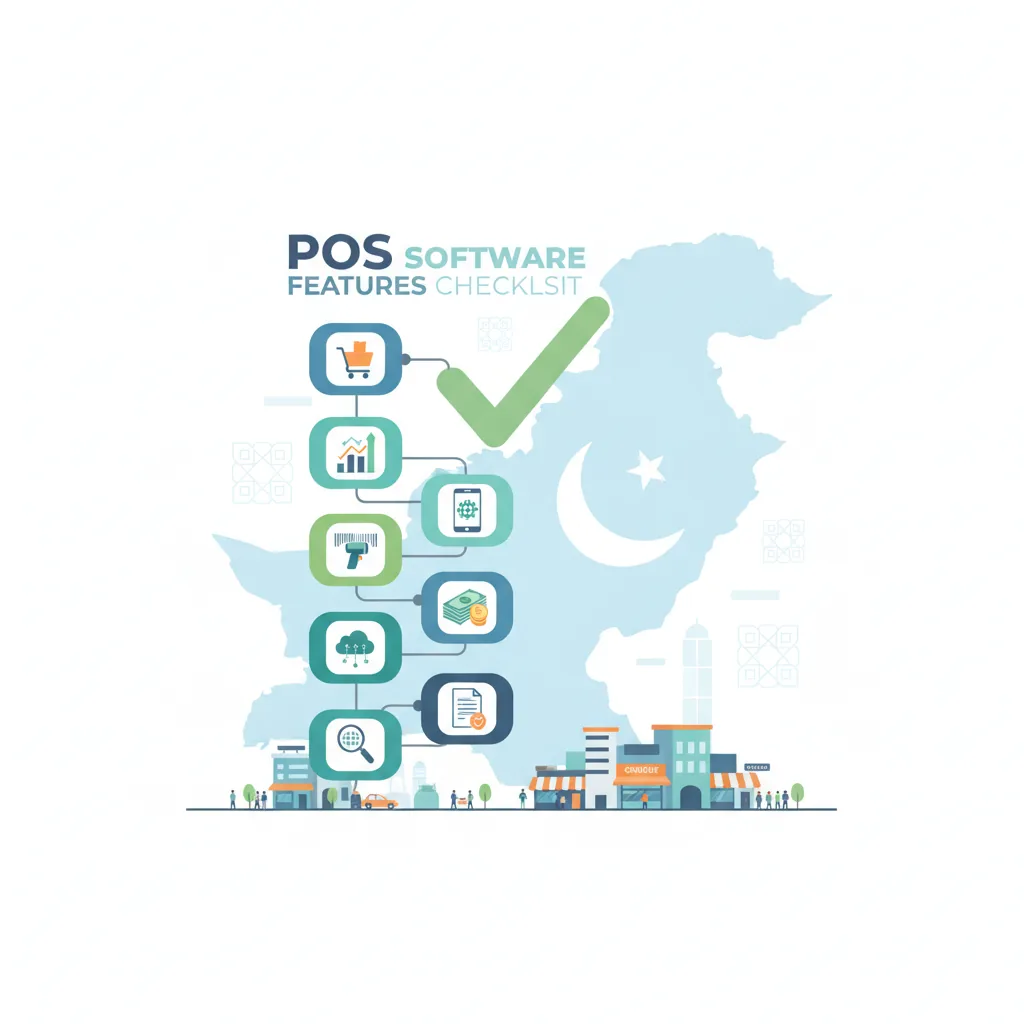
Before purchasing or subscribing to any software for your tailoring business, use this practical evaluation checklist:
- Offline Functionality: Can the counter continue taking bookings, printing advance tokens, and receiving payments during broadband cuts or load-shedding?
- Customizable Customer Fields: Does the system allow custom fields to log specific posture, collar styles, cuff designs, and sleeve lengths?
- Partial Deposit Handling: Does the register cleanly track split payments (advance vs. balance) without distorting daily revenue accounts?
- Multi-Branch or Workshop-to-Shop Linking: If your display boutique is in a commercial market (e.g., Gulberg or Tariq Road) but your sewing workshop is located in an industrial area, can both teams access the same system in real time?
- Mobile Accessibility: Can you, as the business owner, monitor pending deliveries, daily cash intake, and pending orders from your smartphone while away from the shop?
- Local Hardware Compatibility: Does the software connect effortlessly with thermal receipt printers, desktop barcode scanners, and cash drawers?
How CloudPOS Helps Tailor Shops and Boutiques in Pakistan
CloudPOS offers an intelligent, cloud-based platform built specifically to handle the real-world operational demands of Pakistani retail and service enterprises. Here is how CloudPOS directly elevates tailor shops, custom boutiques, and bespoke fabricators:
- Offline Billing Resilience: Unstable internet connections shouldn't bring your counter to a standstill. CloudPOS features seamless offline billing—you can book orders, issue receipts, and manage sales without internet access, and the system automatically syncs everything to the cloud once your connection resumes.
- Comprehensive Customer Profiles: Store unlimited customer records, contact numbers, and purchase histories. Easily access past style notes, preferences, and recurring orders to deliver a premium, personalized bespoke experience.
- Real-Time Trims & Stock Alerts: Prevent production stoppages. CloudPOS monitors your inventory of fabrics, linings, and garment trims, triggering smart low-stock alerts so you reorder before running out.
- Staff & Employee Management: Assign user roles, track counter staff sales, monitor attendance, and calculate karigar job allocations with strict role-based access that safeguards sensitive financial data.
- Multi-Store and Workshop Sync: Run your front-of-house boutique and off-site stitching factory under one centralized account. Monitor stock transfers, orders in progress, and workshop throughput across multiple locations effortlessly.
- Mobile Dashboard Access: With dedicated mobile app accessibility, business owners can check daily revenue, pending delivery orders, and register closing reports from anywhere at any time.
- Integrated Tax and Digital Invoicing: CloudPOS supports local digital invoicing standards and full FBR integration, keeping your growing retail brand compliant without administrative friction.
Modernizing Your Craft Without Losing the Personal Touch
Master craftsmanship is the heart of every great tailoring business. Your customers come to you because they appreciate the fit, comfort, and distinction of custom-made clothing that mass-produced off-the-rack garments cannot replicate. However, world-class stitching backed by disorganized paper administration will always cap your revenue and stress your team.
By moving your order booking, customer measurements, deposit tracking, and workshop schedules into an intuitive cloud-based POS system, you eliminate administrative chaos. Your staff spends less time looking for lost slips and more time delivering exceptional garments on time, every time.
Ready to streamline your tailor shop, eliminate missed delivery dates, and get full control of your workshop? Book a free CloudPOS demo today and see how our tailored POS and ERP platform transforms your business.