Cash Mismatch at Day End: Why Your Till Never Balances (And How to Fix It)
Discover why retail cash drawer discrepancies happen every night in Pakistani shops and how to fix them. Learn actionable shift closing SOPs, petty cash controls, and how POS software eliminates daily counter shortages.
In this article
- The 5 Hidden Leaks Behind Daily Till Discrepancies
- 1. Informal Petty Cash ("Galla" Withdrawals)
- 2. Fast-Paced Change Calculation Errors
- 3. Verbal Discounts and Price Overrides
- 4. Unlogged Returns and Swaps
- 5. Shared Registers Without Shift Accountability
- The True Financial Toll of Unbalanced Registers
- 5 Steps to Fix a Cash Mismatch at Day End (Shop SOP)
- Step 1: Set a Mandatory Morning "Float" (Opening Balance)
- Step 2: Strict "Pay-Out" Logging for Every Expense
- Step 3: Implement "Blind" Day-End Reconciliation
- Step 4: Shift Handovers with Individual Accountability
- Step 5: Enforce Manager Authorization for Voids and Discounts
- Checklist: The Daily Shift-Closing Routine
- How CloudPOS Eliminates Cash Counter Mismatches
- Take Control of Your Counter Cash Flow
It is 10:30 PM. The bazaar outside is winding down, your shop shutters are pulled halfway down, and you sit behind the counter to count the day's cash collection. Your sales slips or rough notebook calculations tell you there should be Rs. 145,000 in the register. You count the notes, separate the Rs. 5,000 and Rs. 1,000 bills, tally the small currency, and arrive at Rs. 139,200.
You recount. The result is the same: a shortfall of Rs. 5,800, yet another cash mismatch at day end.
Where did the money go? Did a cashier hand a customer Rs. 1,000 instead of a Rs. 500 note during the 8:00 PM evening rush? Did the shop boy pay the delivery rider or fetch tea and snacks without jotting down a chit? Did someone accept a customer return and hand out cash without an exchange receipt? Or is money quietly slipping out of the till?
For independent retailers, grocery stores, pharmacies, restaurants, and apparel shops across Pakistan, a recurring cash mismatch at day end is one of the most frustrating operational headaches. It wastes hours of sleep, fuels suspicion between owners and staff, and quietly erodes thin profit margins. Fortunately, drawer discrepancies are rarely an inevitable cost of doing business. They are a process problem, and with the right controls, you can stop them.
The 5 Hidden Leaks Behind Daily Till Discrepancies
When the physical money inside your cash drawer does not match your total sales reports, one or more of five common breakdowns has occurred at your checkout counter.
1. Informal Petty Cash ("Galla" Withdrawals)
In the fast pace of Pakistani retail, the cash drawer often doubles as an emergency petty cash bank. A utility meter reader arrives, a courier requires cash-on-delivery payment, a staff member is sent to buy lunch, or a plumber fixes a shop pipe. Someone dips into the till, pulls out Rs. 800 or Rs. 1,500, and promises to write it down later. By nightfall, nobody remembers the withdrawal, leaving an unexplained shortage during register closing.
2. Fast-Paced Change Calculation Errors
During peak evening trading hours, lines form at the counter. When cashiers calculate change mentally or fumble through unorganized notes, mistakes happen. Handing over two Rs. 1,000 notes stuck together or punching the wrong figures into a desktop calculator during rush periods leads directly to unexplained overages or shortages at night.
3. Verbal Discounts and Price Overrides
Bargaining is deeply ingrained in local retail. When a frequent customer negotiates a Rs. 200 discount on a garment or grocery basket, an informal cashier might accept the lower cash amount without recording an official price adjustment. When the register records full price but the drawer holds discounted cash, the till inevitably fails to balance.
4. Unlogged Returns and Swaps
When a shopper returns a product for a refund or exchanges it for a lower-priced item, cash leaves the register. If the cashier simply opens the drawer, hands over the difference, and sets the returned item on a back shelf without entering a formal return transaction, your inventory becomes inaccurate and your cash balance collapses.
5. Shared Registers Without Shift Accountability
In many shops, multiple people touch the cash drawer throughout the day: the morning attendant, the evening counter boy, the shop manager, and even the store owner during lunchtime. If an error or unauthorized removal occurs, it is impossible to determine when it happened or who was responsible.
The True Financial Toll of Unbalanced Registers
Shop owners often dismiss a daily shortage of Rs. 1,500 to Rs. 3,000 as ordinary breakage or casual error. But simple arithmetic reveals the scale of the leak:
A daily till shortage of just Rs. 2,500 equals Rs. 75,000 in untracked monthly cash loss. Over a full year, that represents Rs. 900,000 drained directly from your net profit.
In an environment where operational overheads—such as commercial electricity tariffs, shop rents, and supplier wholesale prices—continue to rise, no retailer can afford to lose their bottom line to preventable register shortages.
5 Steps to Fix a Cash Mismatch at Day End (Shop SOP)
Eliminating counter discrepancies requires establishing clear, repeatable operating procedures for your checkout staff. Here is an actionable 5-step framework you can introduce immediately.
Step 1: Set a Mandatory Morning "Float" (Opening Balance)
Never start the business day with yesterday's leftover, uncounted money. Every morning, place a fixed amount of change in the drawer (e.g., exactly Rs. 10,000 in mixed denominations). Have the opening cashier verify this figure and sign off on it before the first sale is processed. Any cash present at the end of the day over this initial float represents today's net collections.
Step 2: Strict "Pay-Out" Logging for Every Expense
Implement a strict rule: no currency leaves the cash drawer without a printed or signed expense slip. If Rs. 300 is spent on tea or cleaning supplies, it must be recorded immediately as an official cash payout with the recipient's name and purpose. At day end, total cash plus total documented payout slips must equal gross cash collections.
Step 3: Implement "Blind" Day-End Reconciliation
A major mistake store managers make is letting cashiers look at total daily sales before counting the cash drawer. If a cashier knows the register expects Rs. 85,000, they may manipulate counts or add private funds to avoid questions. In a blind close, the cashier counts the physical cash and notes the numbers down without knowing the computer's expected total. Only after the physical count is locked does the system reveal whether there is an exact match, an overage, or a shortage.
Step 4: Shift Handovers with Individual Accountability
If your shop operates across multiple shifts, close the register between attendants. When Shift A finishes at 3:00 PM, run a shift closing report, count the drawer, hand off the verified opening float to the Shift B cashier, and lock Shift A's cash in a drop safe. By isolating drawer sessions by operator, you eliminate finger-pointing and identify which cashier requires additional training.
Step 5: Enforce Manager Authorization for Voids and Discounts
Prevent unauthorized drawer manipulation by restricting register permissions. Cashiers should not have permission to delete scanned items, cancel completed receipts, or apply discretionary discounts without a manager's override PIN. This ensures that every price reduction is legitimate and recorded.
Checklist: The Daily Shift-Closing Routine
Save or print this quick checklist for your checkout team to ensure zero-leak daily closing:
- Morning Float Confirmed: Verified starting denominations counted and logged before unlocking sales.
- Petty Cash Matched: Every intermediate expenditure backed by a physical receipt or digital payout entry.
- Card & QR Reconciliation: Digital card POS terminal totals and digital payments matched against their respective register payment tenders.
- Physical Blind Count: Notes and coins sorted by denomination, counted twice, and entered into the register closing screen.
- Discrepancy Investigation: Any variance greater than Rs. 200 investigated immediately while events are fresh in staff memory.
- Safe Drop & Reset: Net earnings transferred to the secure store safe, leaving only the standard float for tomorrow's opening shift.
How CloudPOS Eliminates Cash Counter Mismatches
Manual notebooks and generic cash drawers cannot enforce operational discipline. A specialized retail management platform like CloudPOS builds cash integrity directly into your daily workflow:
- Cashier Shift Management & Blind Sessions: CloudPOS allows staff to open and close specific cashier shifts with mandatory float recording. When closing, cashiers perform blind reconciliation by entering physical counts, giving managers immediate variance alerts without exposing expected numbers.
- Pay-In and Pay-Out Tracking: Staff can record petty cash expenses (like courier payments or store supplies) straight from the point of sale interface, ensuring every rupee taken from the drawer is cataloged against an accounting category.
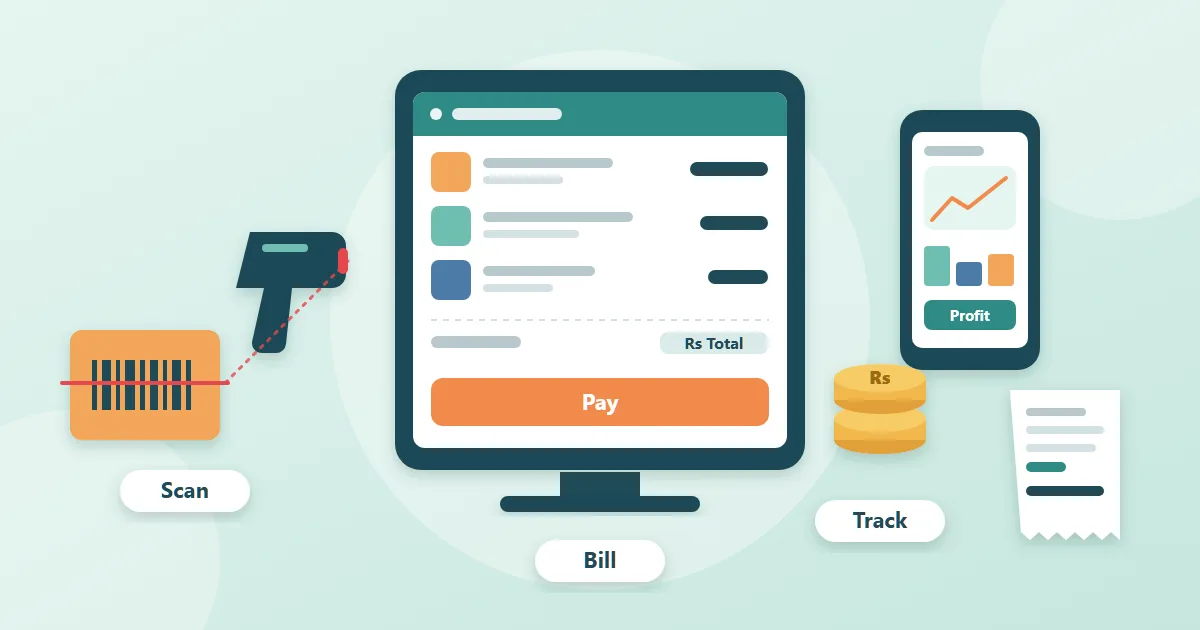
- Automated Change Calculation: When a cashier scans barcodes and enters the customer's tendered cash, CloudPOS displays the exact change due on screen, preventing mental math slip-ups during peak rush hours.
- Employee Access Controls & Permissions: Protect your margins by setting granular roles. Cashiers can ring up sales, while voiding line items, processing refunds, or applying special discounts requires supervisor approval.
- Continuous Offline Billing: Internet instability will not halt your register or force you into manual handwritten slips. CloudPOS continues processing sales and tracking till sessions offline, syncing data securely to the cloud the moment connectivity resumes.
- Real-Time Mobile Oversight: Whether you are at home or traveling, check your store's live cash register balance and view end-of-day discrepancy reports through dedicated mobile applications.
Take Control of Your Counter Cash Flow
Every rupee lost at the cash counter is pure profit walking out of your business. Cash mismatches are not an unavoidable cost of running a retail shop in Pakistan; they are simply the result of loose cash handling routines and outdated counter tools.
By putting a strict petty cash policy in place, enforcing blind register closing, and equipping your checkout counter with an automated system that monitors every rupee, you can protect your profits and close your shop every night with absolute peace of mind.
Ready to put an end to daily cash drawer shortages and gain complete visibility over your store's daily sales? Book a free CloudPOS demo today and see how effortless shift closing and till reconciliation can be.