How to Scale a Retail Business in Pakistan: 5 Systems to Grow Beyond the Counter
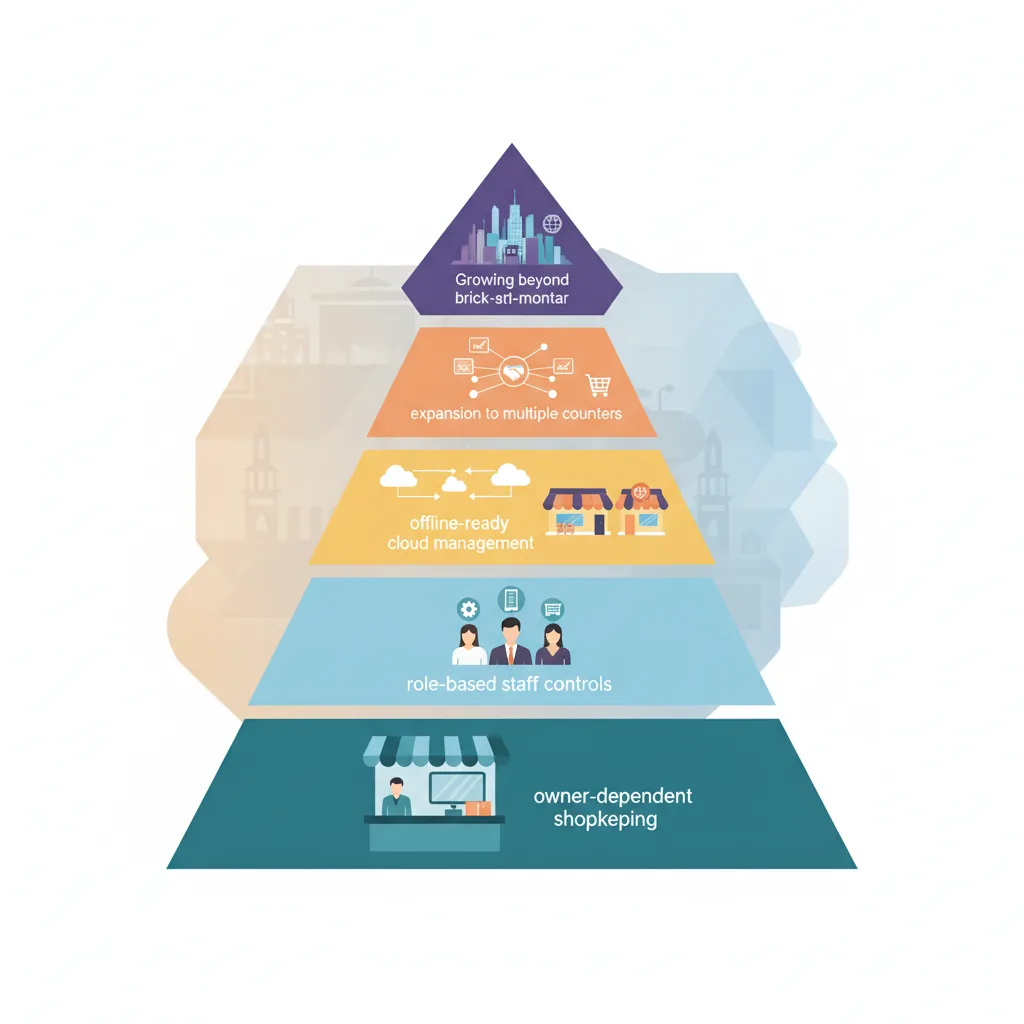
Scaling a retail business in Pakistan requires moving away from owner-dependent shopkeeping toward structured operational systems. Learn the five foundational systems—from role-based staff controls to offline-ready cloud management—that allow Pakistani retailers to expand to multiple counters and branches without losing control.
In this article
- The Dukan Mindset vs. Scalable Retail Operations
- 1. Role-Based Staff Delegation and Permission Controls
- 2. Automated Inventory Control and Smart Reorder Points
- 3. Offline-Resilient Infrastructure Built for Pakistan
- 4. Centralized Multi-Branch and Remote Visibility
- 5. Integrated Customer Retention and Omnichannel Readiness
- The "Ready-to-Scale" Retail Checklist
- How CloudPOS Helps You Scale a Retail Business in Pakistan
- Stop Managing the Counter—Start Leading the Business
Ask almost any independent retail owner in Lahore, Karachi, Rawalpindi, or Gujrat who wants to scale a retail business in Pakistan about their biggest daily headache, and the answer is rarely a lack of customers. Instead, it is the counter trap. If you step away from the cash desk for Friday prayers, take an afternoon off for a family commitment, or visit wholesale markets like Shah Alam or Bolton Market to restock, daily operations immediately stall. Cash registers stop balancing, inventory counts develop mysterious discrepancies, and staff call you every fifteen minutes asking whether an item is in the godown or if a customer qualifies for a discount.
You may have established a profitable shop, but you have not yet built a scalable business. You have built a demanding, full-time job that requires your physical presence behind the till from morning until midnight. When you decide to scale a retail business in Pakistan—whether that means opening a second checkout lane, launching an eCommerce store, or expanding to your second and third branches—relying on personal supervision simply collapses. Growth demands standard operating systems that protect your profits and run your floor smoothly, even when you are not in the room.
The Dukan Mindset vs. Scalable Retail Operations
Small and medium-sized enterprises represent roughly 90% of all businesses in Pakistan and contribute approximately 40% to national GDP, according to the Small and Medium Enterprises Development Authority (SMEDA). Yet despite this massive entrepreneurial energy, only a small fraction of independent retailers ever manage to grow from a single busy shop into a recognized regional or national retail brand.
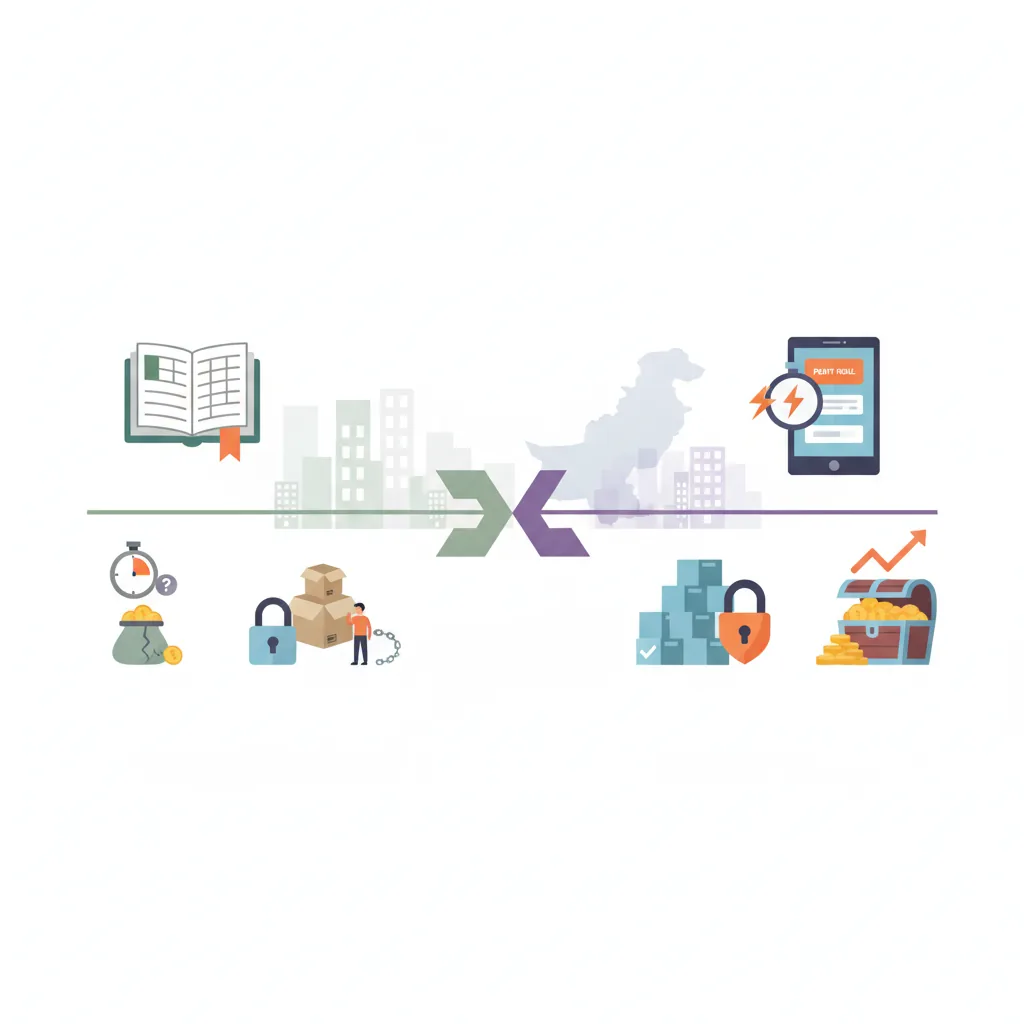
The barrier is rarely capital or customer demand. It is the operational ceiling of the traditional dukandari mindset:
- Knowledge is locked in the owner's head: Product costs, wholesale margins, reorder thresholds, and customer credit limits exist only in your memory or an unorganized notebook.
- Trust replaces verification: Daily cash reconciliation depends on casual trust rather than strict system audits, leading to cash leakage and stock shrinkage.
- Decisions cannot be delegated: Because employees lack clear system permissions and defined pricing rules, they cannot make routine operational decisions on their own.
To scale sustainably, you must transition from a person-dependent business to a system-dependent business. Here are the five foundational systems every Pakistani retailer must establish before attempting to expand.
1. Role-Based Staff Delegation and Permission Controls
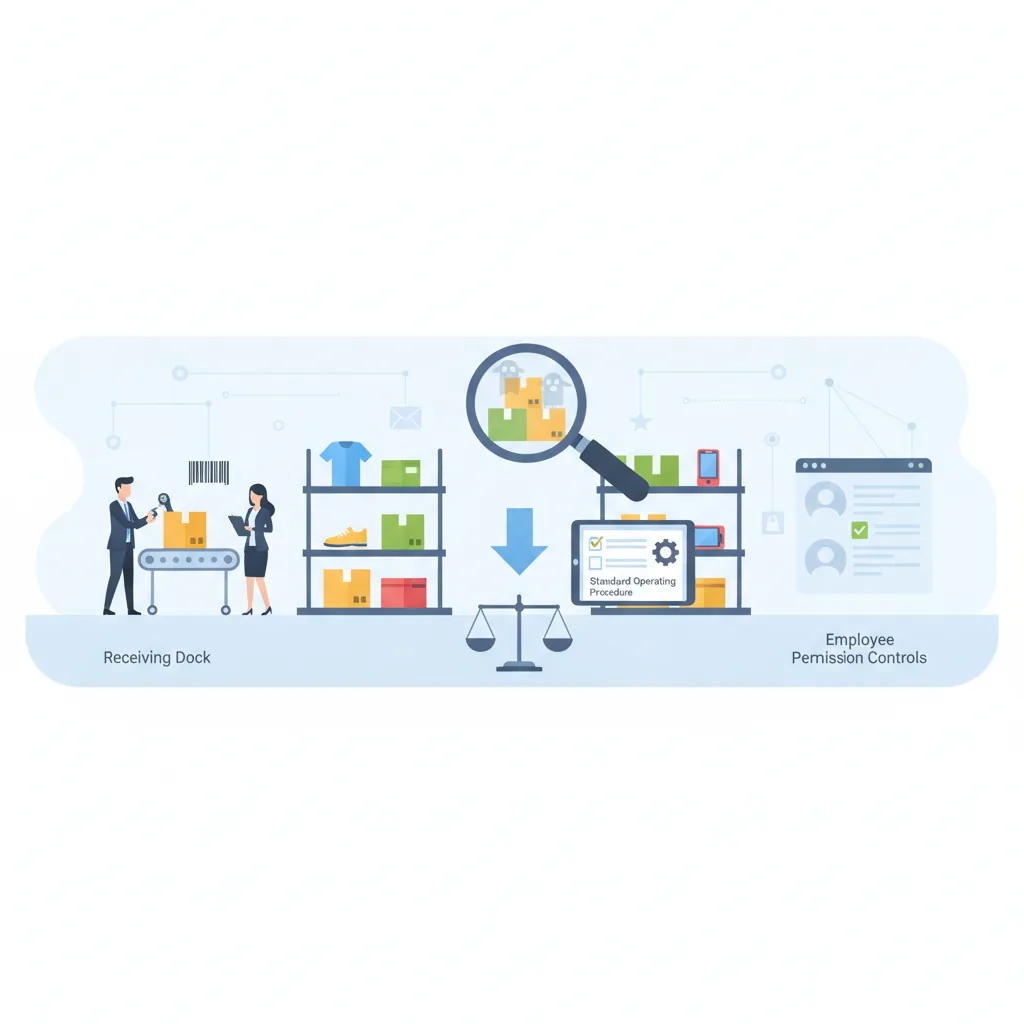
The primary reason store owners cannot leave their counter is fear of theft or unauthorized discounts. When every worker uses the same register account or operates from an open cash drawer, pinning down accountability becomes impossible.
Scaling requires clear operational boundaries enforced by technology. Your frontline cashiers need the tools to scan items, process payments, and issue printed receipts rapidly. However, they should not have the authority to edit product retail prices, issue manual refunds without supervisor approval, or view your supplier wholesale cost sheets. Setting up role-based access controls allows you to step away with complete confidence:
- Cashier Access: Barcode scanning, standard sales billing, receiving customer payments, and issuing itemized receipts.
- Floor Manager Access: Approving returns, applying authorized promotional discounts, and initiating inter-branch stock requests.
- Owner Access: Full visibility into profit margins, inventory valuation, cost accounting, and employee performance metrics.
When shifts change, each cashier must complete a structured shift closing that compares physical drawer cash with system sales. Any variance is identified immediately rather than discovered weeks later at the end of the month.
2. Automated Inventory Control and Smart Reorder Points
In a single small shop, an experienced retailer can glance at the shelves and know what needs to be ordered from the distributor. But when you handle hundreds of active SKUs, manage a separate backroom godown, or open multiple counters, visual estimation fails.
Unsystematized inventory management leads to two silent profit killers: stockouts on your fastest-selling products (lost revenue) and over-purchasing slow-moving items (trapped working capital). In an economy where financing costs and supplier terms require careful cash flow discipline, dead capital sitting on backroom shelves can sink an expansion plan.
A scalable store requires structured inventory management with clear item categorization, barcode labeling, and automated low-stock reorder thresholds. The moment an item drops below its defined safety buffer, your system should automatically generate a reorder notification. This allows procurement to happen systematically based on sales velocity rather than last-minute guesswork.
3. Offline-Resilient Infrastructure Built for Pakistan
Retail technology designed for Western markets often assumes 100% broadband uptime and uninterrupted electricity. In Pakistan, reality is different. Unscheduled load shedding, fiber cuts, and cellular network slowdowns are regular operational hurdles across major commercial hubs.
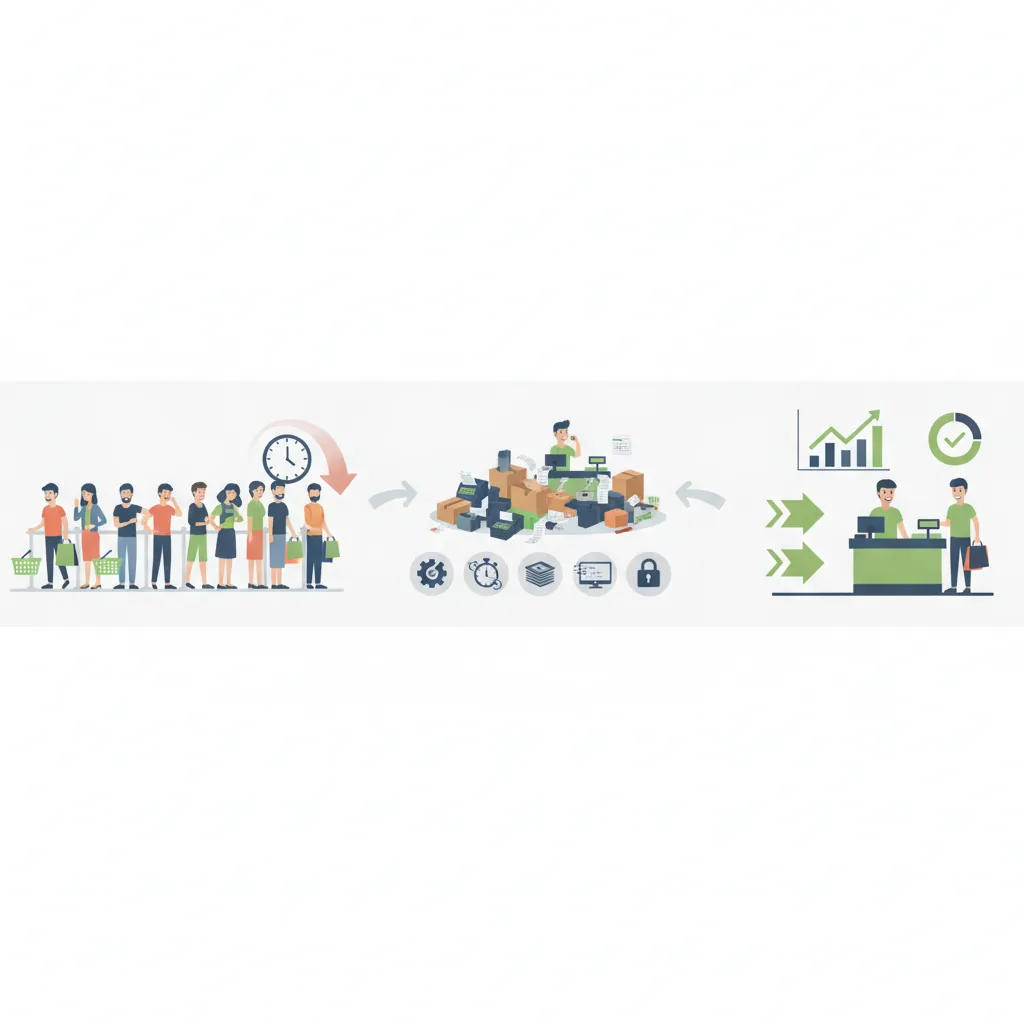
If your checkout counter freezes every time the local internet connection drops, checkout lines swell, customers walk away frustrated, and sales figures get corrupted. A scalable retail system must utilize an online and offline hybrid architecture. Your staff must be able to scan barcodes, print invoices, and collect payments locally on the terminal during an outage. The moment internet connectivity returns, the local terminal should automatically sync all transactional data to your centralized cloud database without manual intervention.
4. Centralized Multi-Branch and Remote Visibility
When you operate one outlet, you evaluate daily performance by standing near the counter. When you operate two, three, or more outlets, your role changes from front-desk cashier to operational manager. You cannot be in Gulberg, DHA, and Saddar simultaneously.
Without centralized management, each branch operates like a siloed island. You end up relying on branch managers sending evening WhatsApp screenshots of manual register sheets or Excel files that take hours to compile. A scalable retail framework connects every sales point to a single master database:
"True retail scalability means an owner can sit anywhere in the world, open their smartphone, and inspect real-time sales numbers, current warehouse stock, and cashier drawer balances across all outlets within seconds."
Centralized oversight also streamlines stock rebalancing. If Branch A runs out of a popular garment or electronic accessory while Branch B has excess inventory gathering dust, your system should allow you to transfer stock between outlets seamlessly, avoiding unnecessary distributor reorders.
5. Integrated Customer Retention and Omnichannel Readiness
Acquiring a new walk-in customer through commercial street rent, exterior signage, and paid social media marketing costs far more than retaining an existing buyer. Yet many Pakistani retailers let hundreds of shoppers walk out the door every week without capturing a single data point.
Scalable retailers systematically build customer profiles. By logging a customer's mobile number at checkout, you begin tracking their purchase history, average basket size, and buying frequency. This allows you to launch targeted loyalty rewards, notify VIP customers when fresh seasonal collections arrive, and personalize service across all branches.
Furthermore, consumer shopping habits in Pakistan have changed dramatically. Modern buyers regularly browse product catalogs on social platforms or digital storefronts before visiting a physical store, or order directly for home delivery. If your in-store inventory is disconnected from your digital channels, staff will accidentally sell reserved stock online or fail to fulfill orders on time. An integrated system unifies your physical counter with your digital orders, ensuring stock levels update in real time across every touchpoint.
The "Ready-to-Scale" Retail Checklist
Before you invest capital in an additional lease, hire extra staff, or expand your stock room, review this practical operational checklist. Ensure your business can check off every item:
- Standardized Barcode Catalog: Every item on your sales floor and in your godown has a unique barcode and standardized SKU name entered into a centralized database.
- Documented Shift-End SOP: A defined end-of-day closing routine where cashiers match physical cash, digital card payments, and Raast QR receipts against system totals before leaving.
- Role-Based System Permissions: Employees operate under dedicated user logins with restricted rights, preventing unauthorized discounts, ledger edits, or inventory adjustments.
- Automated Minimum Stock Triggers: Every key product category has established minimum buffer levels that trigger automated reorder alerts.
- Offline Operational Continuity: Hardware and software that continue scanning and billing smoothly during internet disruptions and generator switchovers.
- Remote Mobile Reporting: The business owner can monitor daily store margins, top-selling items, and stock movement remotely without calling store personnel.
- Integrated Invoicing and Compliance: Standard digital receipts that meet local tax requirements and digital invoicing standards without slowing down peak-hour counter queues.
How CloudPOS Helps You Scale a Retail Business in Pakistan
Building these operational systems from scratch using fragmented spreadsheets or rigid legacy software is time-consuming and expensive. CloudPOS provides a unified cloud-based POS and AI-powered ERP platform tailored specifically for retail, service, and wholesale businesses across Pakistan.
Whether you manage a supermarket, garments boutique, pharmacy, electronics store, or wholesale business, CloudPOS delivers the tools required to move from single-shop operations to structured multi-branch scale:
- True Online & Offline Billing: Your counters never halt. Continue scanning and completing sales offline during internet outages; CloudPOS automatically syncs all records to the cloud the moment connectivity is restored.
- Centralized Multi-Store Control: Manage inventory, pricing rules, and branches across multiple locations from one central account, with real-time stock transfer workflows.
- Smart Inventory & Low-Stock Alerts: Maintain accurate godown control, track batch numbers or serials (such as mobile IMEIs), and receive automated low-stock warnings before popular items sell out.
- Granular Employee Management: Assign custom user permissions, track individual staff sales, manage attendance, and eliminate register mismatches with transparent cash-drawer tracking.
- Mobile Apps for Anywhere Oversight: Access comprehensive sales reports, profit margins, and inventory movement on your phone or tablet, freeing you from being tied to the counter.
- Omnichannel & eCommerce Integration: Synchronize your physical retail stock with your online storefront and courier operations to prevent double-selling.
- Seamless Local Compliance: CloudPOS supports full FBR integration and digital invoicing out of the box, ensuring your growing operation meets national regulatory standards without adding paperwork.
Stop Managing the Counter—Start Leading the Business
Scaling a retail business in Pakistan does not require working 18-hour days or placing trusted relatives behind every cash drawer. It requires replacing manual habits with robust operational systems that make errors visible, stock traceable, and staff accountable.
When your stock, billing, staff, and multi-store records run on a dependable platform, your store ceases to depend on your physical presence every hour of the day. You regain the freedom to focus on strategic supplier negotiations, brand marketing, and opening your next profitable location.
If you are ready to modernize your operations and build a retail business designed for sustainable growth, book a free CloudPOS demo today and see how structured cloud systems can transform your store.
===CONTENT===